

The National Gallery of Armenia, housed in a grand building on Yerevan’s Republic Square, offers a fascinating look at how Armenia’s art has evolved through the centuries from Early Christian art to the 20th century. Several galleries display Russian and other European art as well, highlighting the dialogues which have taken place between Armenia and the surrounding world both historically and artistically. The museum’s vast spaces overview Armenia’s history and its unique identity and offer visitors the chance to immerse themselves in Armenia’s rich artistic tradition.
History of the National Gallery of Armenia
The National Gallery of Armenia, along with the History Museum, is an essential part of the architectural complex of Republic Square in the center of Yerevan. Originally designed and constructed in the 1920s by Armenian architect Alexander Tamanyan, Republic Square was part of a larger initiative to transform and modernize Yerevan. The national gallery complex, like many of the buildings on Republic Square, was built in stages in classical style. One side of the square is entirely taken up by the museum complex, fronted by an impressive public fountain that displays choreographed water and light shows each evening.
The current iteration of the building was completed in 1980, but the museum itself was founded in 1921 under the Armenian Soviet Socialist Republic (SSR). Originally it was a part of the History Museum, and it was not until 1935 that the museums separated. The gallery became a separate entity simply called “The Art Museum.” In 1947 it was re-named the State Picture Gallery of Armenia before finally becoming the National Gallery of Armenia in 1991.
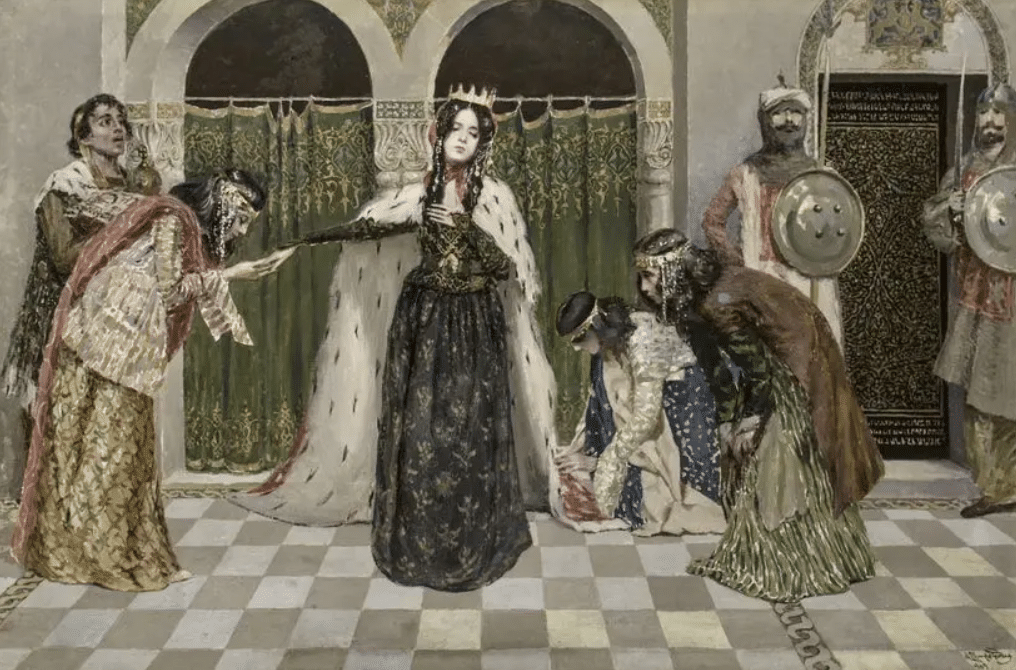
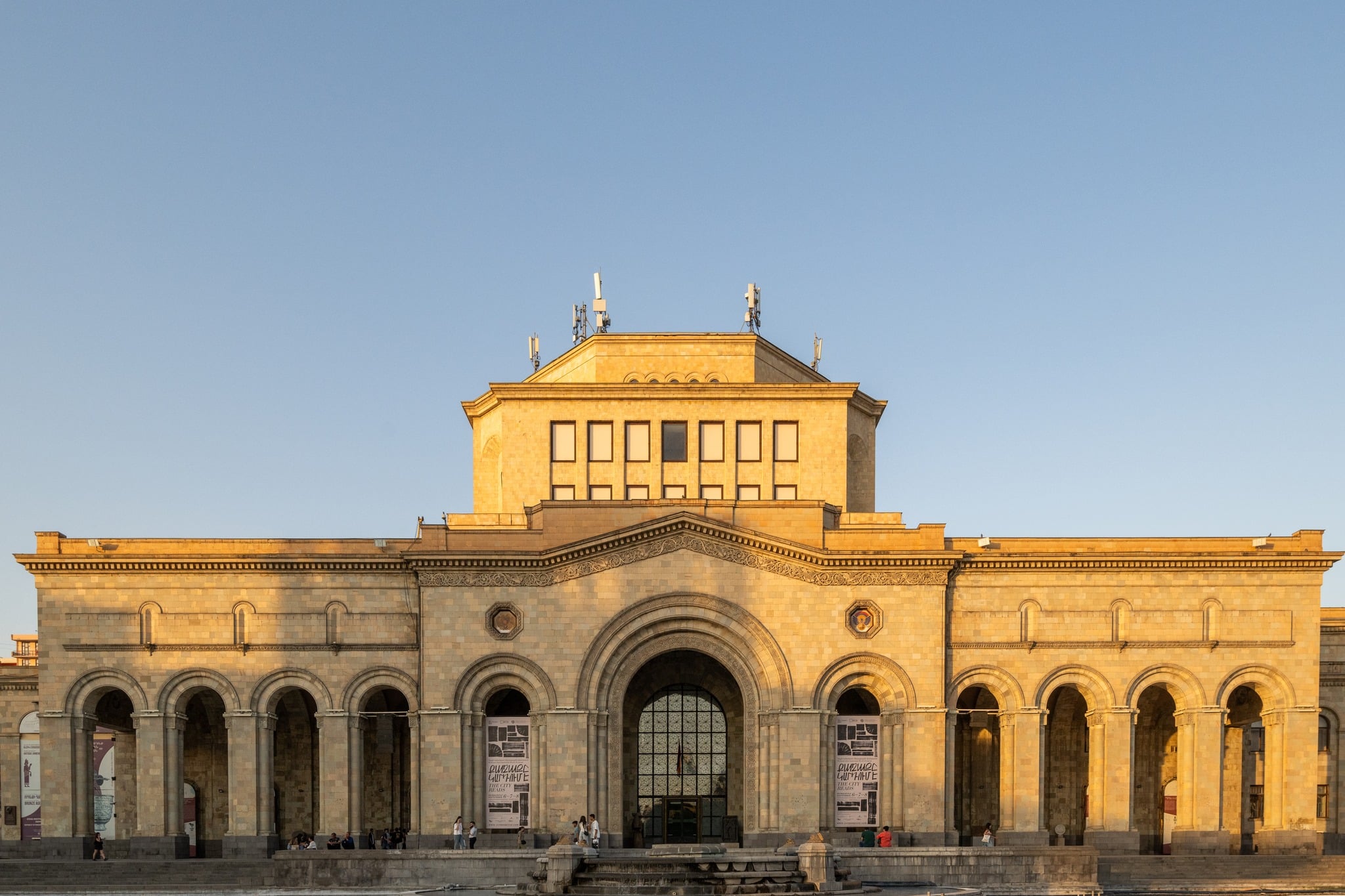
The museum collection has slowly grown from an original acquisition of a series of paintings from an Armenian painter’s exhibition in 1921; since then, many donations and acquisitions from Armenian, Russian, and European artists has brought the collection to where it is today. It is currently the largest collection of Armenian art in the world, and boasts an impressive collection of international artworks in addition, spanning seven floors with 56 gallery halls and over 40,000 art objects.
International, Russian, and Soviet Collections
The National Gallery of Armenia leads its visitors through its massive collection in stages with each floor displaying art of different eras and origins. The museum directs its visitors to begin on the top floor, which displays European artworks, primarily sculptures, landscape paintings, and portraiture. Of particular note were several excellent Italian Renaissance Madonnas, including a painting of the nativity by Sandro Botticelli.
The next few floors consisted of Russian art from the 16th century through the Soviet era. Much of this collection was brought to Armenia from the Hermitage and the Armenia House of Culture in Moscow during the 1920s. The Russian galleries begin with a wall of icons from the 16th-18th centuries and move into a collection of traditional portraiture, still-lifes, and landscapes from the Tsarist period of the 18th-19th centuries. Notable artists featured from this period include famous portraitists D. Levitsky and F. Rokotov.
As the Russian galleries move into the late 19th and early 20th centuries, paintings from artists like N. Roerich (“Path of the Giants”, “The Conquest of Kazan”) are indicative of the shift towards symbolism and abstractionism while the works of S. Utkin and P. Kuznetsov, represent the Russian symbolist movement. Another notable artist in this collection is Filip Malyavin, whose vibrant and explosive paintings are unforgettable. These galleries conclude with the museum’s Avant-Garde and Soviet Art collections, which continue to reflect the drastic social and ideological changes taking place in the Soviet world that they were created in.


Armenian Art Collection
The signage at the beginning of the Armenian art galleries provides an overview of art history in Armenia. Because of the nation’s tumultuous history in the last few centuries, its turn towards the fine arts has been slower than in other Western countries. But the influence of the Enlightenment and expanding dialogues between Armenian and European art schools transformed the country into a center for a rich and vibrant artistic tradition, deeply influenced by the works of French Impressionists yet also uniquely and distinctly Armenian. This art became a powerful means of expressing and strengthening Armenian identity and nationhood.
Many of the Armenian galleries are focused on particular artists whose work was essential in shaping Armenian art. The first of these artists is Yeghishe Tadevossian, who is credited with infusing Impressionist depictions of light and color with Armenian character and spirit which led to the founding of a uniquely Armenian school of Impressionism. This formed the basis for the Armenian art world in the early 20th century. Several other notable Armenian Impressionists are on display as well, such as Vahram Gayfedjian.
Later in the 20th century, a shift towards realism began to emphasize, in part, the many hardships that the Armenian people have faced in the past and present. Armenian art turned towards depicting and reflecting vibrant landscapes and cultures. This period also marked the emergence of several notable female artists in Armenia, including Zabel Boyadijan, Noemi Gapmadjian, and Arminia Babayan, whose works are displayed. Meanwhile, Vardges Sureniants depicted scenes from stories, folklore, and the Bible through airy, dream-like paintings and illustrations.
These Armenian galleries stand out from the others through their bright, courageous use of color and brushwork. Even the walls of the galleries themselves are painted in bright yellows, greens, and blues which might drown out art from other schools but which enlivens this spirited and distinctively Armenian collection. The newest art in the Armenian galleries dates mostly to the mid-to-late 20th century and focuses on highly stylized paintings of primarily human figures and imaginative still-lifes of fruits and flowers. These works grow more bold, colorful, and stylized the nearer they get to the modern day, showing how Armenian art is still evolving and becoming increasingly expressive and unique.
The collection ends with the oldest art in the museum: two massive gallery spaces displaying ancient frescoes and mosaics taken from old Armenian churches and monasteries, which depict Biblical scenes as well as icons of Christ, the Theotokos, and the Saints. One of the most significant pieces in this collection of ancient Christian art is a copy of the icon The Madonna of Sevan, which is said to have been a miracle-working icon. The museum signage recounts that the original icon once spoke to a priest and encouraged him to found an Armenological center. Though the art in this section is ancient and faded with time, it maintains a sense of the same boldness and vibrancy which is found in the more modern Armenian art. This collection seems to act as a bridge between the modern, contemporary art of Armenia and its inseparable origin in ancient Christian art.
This museum remains one of the most beautiful and striking collections which I have seen. Each Armenian artist instigates a reflection upon how we encounter nature, culture, and their intersection through artistic expression. Above all, one leaves the museum feeling that they have encountered an essential and deeply rich corner of art history, little known to the wider world and yet no less important.
You’ll Also Love

Museums as Self-Care
In 2018, doctors in Montreal began prescribing visits to the Montreal Museum of Fine Arts (MMFA) for patients experiencing depression, anxiety, and other health issues. This innovative approach to mental health treatment was launched under the initiative of the MMFA in collaboration with Médecins francophones du Canada (MFdC). The program allows physicians to provide patients […]

The National Gallery of Armenia
The National Gallery of Armenia, housed in a grand building on Yerevan’s Republic Square, offers a fascinating look at how Armenia’s art has evolved through the centuries from Early Christian art to the 20th century. Several galleries display Russian and other European art as well, highlighting the dialogues which have taken place between Armenia and […]

SRAS Visit to Erebuni Museum Complex and Archeological Ruins
The fortress of Erebuni, once the great capital of the mighty Uratu Kingdom, is located on the outskirts of Yerevan. The ruins of the citadel are flanked on one side by quiet mountains – their rocky slopes reaching up toward the hot summer sun. On the other side is Yerevan and the Ararat plain. The noise of […]
A Visit to the Martiros Saryan House-Museum in Yerevan
The Martiros Saryan House-Museum is located in the three-story former home of Martiros Saryan. Located just a 10-minute walk from Yerevan’s central Freedom Square, on a leafy street now named for the artist, the building is open to the public and used to display his art and celebrate his life. During my study abroad program […]

Ararat Brandy Factory in Yerevan, Armenia: Travel for PCON
Ararat Brandy Factory: A Little Bit of Brandy and a Whole Lot of History Yerevan, Armenia (Excursion included in the Policy and Conflict Program, Fall 2017) Cost of Souvenir Brandy: 7,170-16,730 Armenian Dram ($15-$35 depending on quality of brandy) During our one-week stay in Armenia, my group had a special excursion to the Ararat […]
