

Centrally located in a historic building on Shota Rustavelli Avenue, the National Gallery is one of many museums that are unified under the Georgian National Museum. It is known for its collection of historic and contemporary Georgian art, from paintings and drawings to sculptures, as well as a number of original works by famed Georgian national artist Niko Pirosmani.
History of the Museum
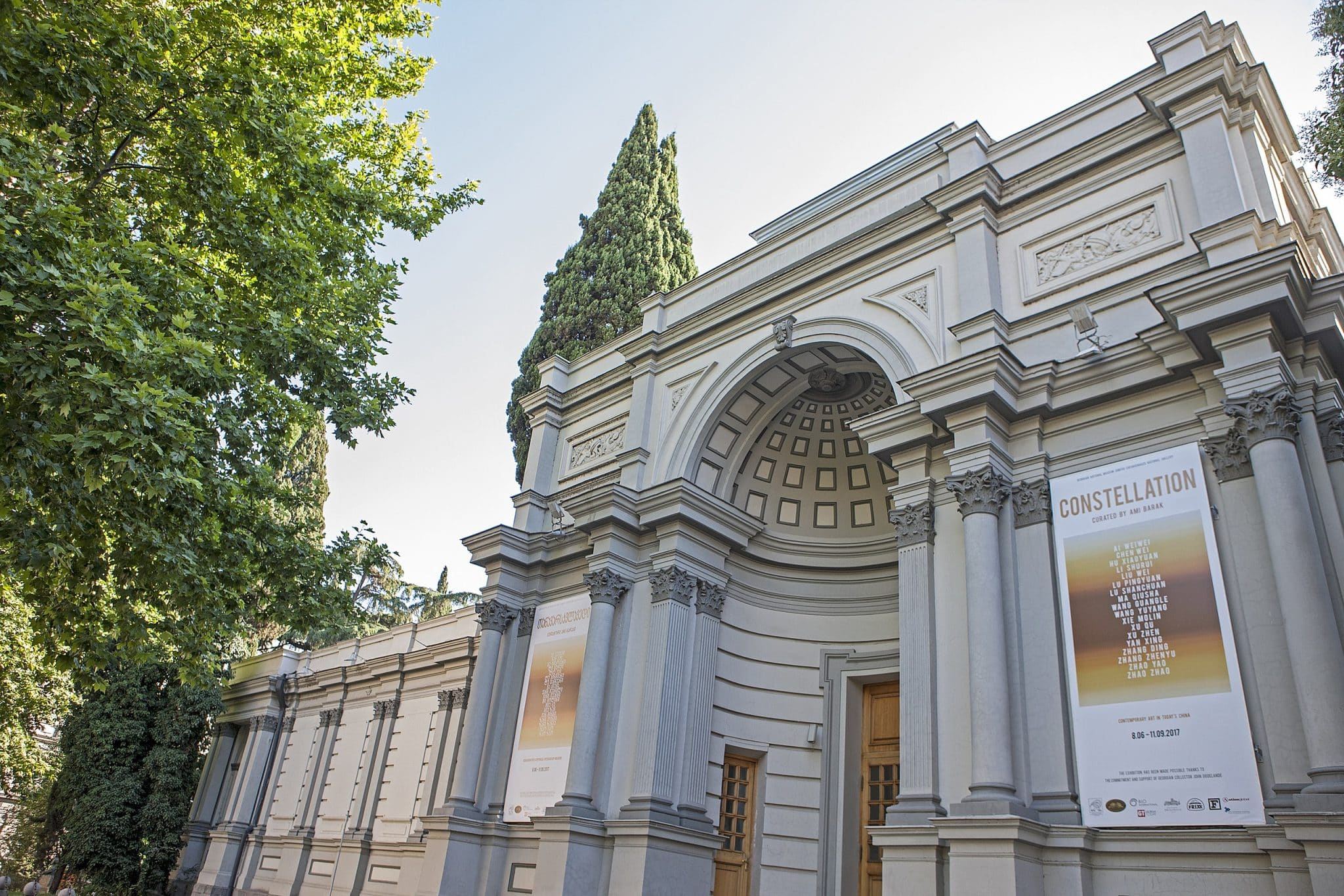
The National Gallery was established in 1917, but the iconic building itself was originally built in 1888 to house the Russian Military-Historical Museum during the period of imperial Russian rule in Georgia. The building was inspired by Italian palatial architecture and designed by a German architect, Albert Salzman, who lived in Tbilisi. Before its modern restoration, the National Gallery was affectionately known as the “Blue Gallery”, a name inspired by its historic blue facade—though now the façade is painted white.
In 1917, following the country’s liberation from Russian occupation at the beginning of its short-lived independence, the museum as it stands today was established by Dimitri Shevardnadze. A prominent public figure and artist in 20th century Georgia, he worked to build the museum’s collection and establish it as a center for arts and culture in Tbilisi. Shevardnadze’s efforts not only created the National Gallery, but would later contribute to the founding of the State Art Museum as well. Throughout the 20th century, the National Gallery’s collection continued to grow and celebrate both Georgian art and internationally renowned artists like Michelangelo and Botticelli.
In 2007, the museum underwent a restoration that expanded the museum and modernized its exhibit spaces, bringing the museum into the 21st century. That same year, the National Gallery was absorbed into the Georgian National Museum. In 2009, the museum building was officially named a Georgian Cultural Monument.
Museum Collection
The National Gallery boasts a collection of over 30,000 art objects of significant artistic and cultural relevance. Though the museum is small, spanning just two floors, each room displays an abundance of compelling works.
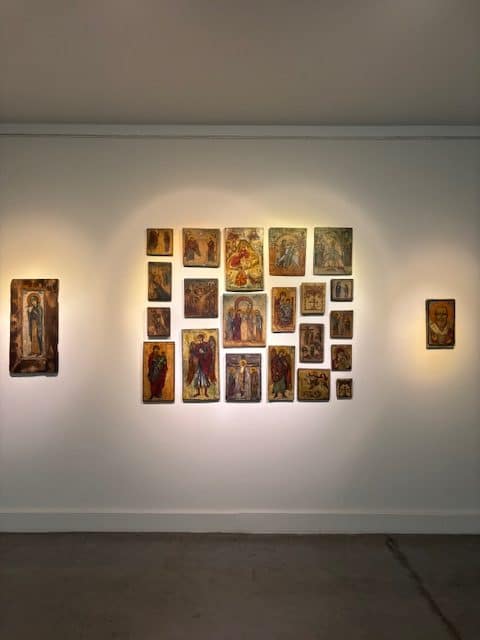
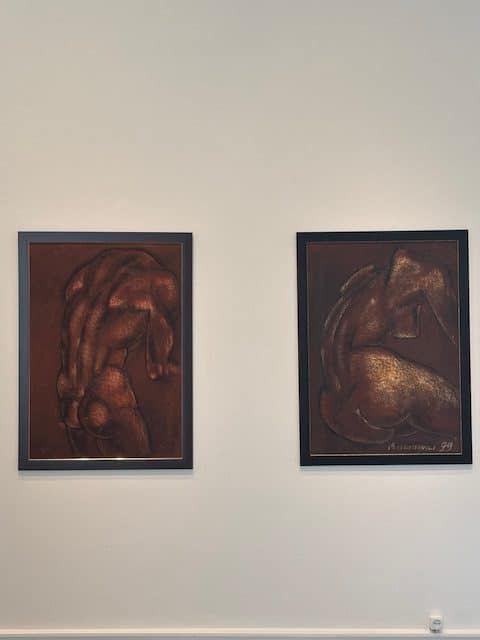
Much of its current exhibition space, as of summer, 2025, is dedicated to the work of Marina Ivanishvili (1952-2025), a contemporary Georgian artist whose body of work has been hugely influential on Georgian art and culture. Her portfolio weaves together drawings on paper as well as sculpture, all united through a distinctive style. Museum signage states that Ivanishvili’s exhibition CORPUS MARINA focuses on three themes: “body, sacrifice, and crucifix,” with one room focusing on one theme each, from her stylized and exaggerated interpretations of the female body, to her traditional iconographic work, to explorations of Crucifixion imagery and repeated motifs of the sacrificial bull. Ivanishvili’s focus on both Christian and erotic imagery simultaneously celebrates and challenges Georgian beliefs and customs.
Above: a brief tour of the Marina Ivanishvili exhibit and descriptions of her work and significance.
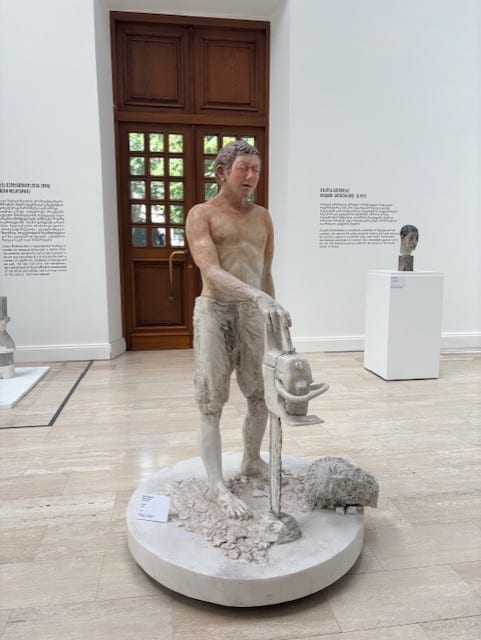
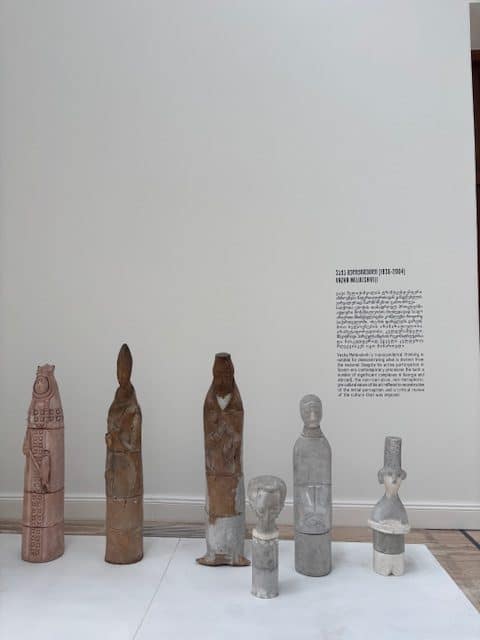
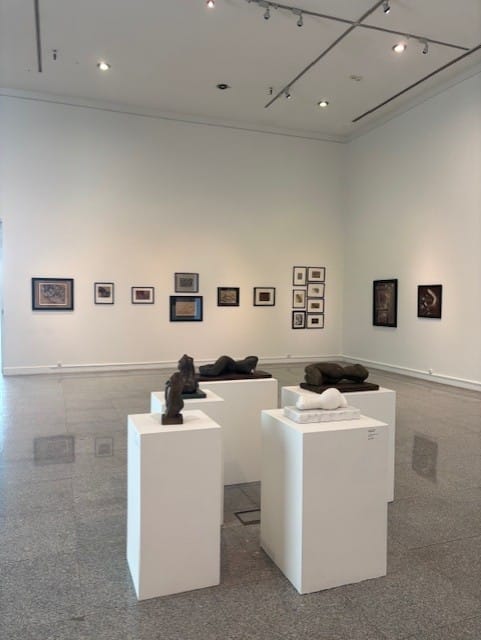
Following the extensive Marina Ivanishvili exhibition, there are two large halls displaying the work of significant historical Georgian artists. One is dedicated to several of early sculpture artists of Georgia. The first of these artists was Iakob Nikoladze, who is considered the first modern Georgian sculptor and credited with introducing the medium into Georgian art. Displayed are examples of his bust sculptures. Nikoladze, along with Nikoloz Kandelaki (also featured in this gallery), helped to establish the Georgian School of Sculpture. Nikoladze was also one of the founders of the Tbilisi State Academy of Fine Art. Following from these foundational works are the works of several more experimental sculptors, such as Vazha Melikshvili or Rocko Iremashvili’s shocking depiction of David and Goliath in which David yields a chainsaw.
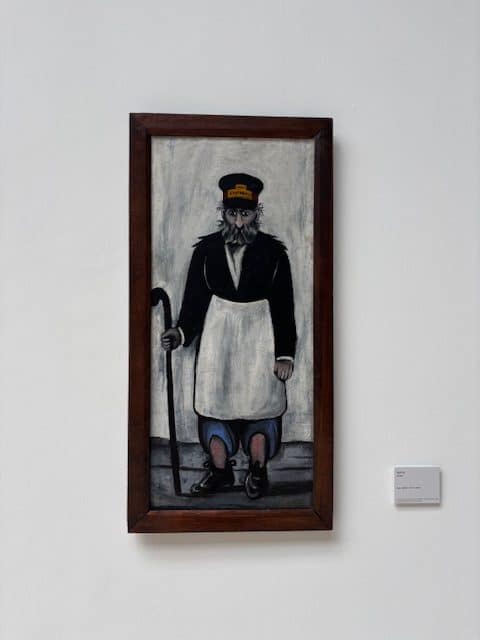
The final main exhibition hall is focused on the museum’s most culturally and historically significant collection: the works of Niko Pirosmani, Georgia’s most renowned fine artist. Perhaps Georgia’s most internationally recognized painter, his uniquely stylized depictions of Georgian life and culture are often taken as symbolic of Georgian history. The National Gallery’s collection of Piromani spans much of his career and the artist’s unique and honest characterization of everyday Georgians and the intersection of folk traditions with modern life in the 19th and 20th centuries. Included in the collection are some of his most famous works, such as Janitor and the Actress Margaret, and many works which playfully depict the Georgian landscape and folk life.
Above: A brief tour of Niko Pirosmani’s works at the National Gallery.
Several smaller rooms throughout the museum are dedicated to temporary exhibits. At the time of my visit, in summer of 2025, these included various contemporary sculptures scattered throughout the upstairs hallways and an exhibition of the work of Zurab Porchkidze, an illustrator known for his whimsical illustrations of both international stories and traditional Georgian histories and folklore.
Impact of the Museum
The Georgian National Gallery still maintains its original purpose of bringing Georgian art both to the local community as well as an ever-growing international audience. From the exhibits which stand today, it is clear that the museum is able to unite both the historical legacy of fine arts in Georgia to the contemporary art scene in the country. It celebrates the past while supporting the growth of modern artists.
You’ll Also Love

Museums as Self-Care
In 2018, doctors in Montreal began prescribing visits to the Montreal Museum of Fine Arts (MMFA) for patients experiencing depression, anxiety, and other health issues. This innovative approach to mental health treatment was launched under the initiative of the MMFA in collaboration with Médecins francophones du Canada (MFdC). The program allows physicians to provide patients […]

Georgian National Gallery: A Unique Artistic Vision in Tbilisi
Centrally located in a historic building on Shota Rustavelli Avenue, the National Gallery is one of many museums that are unified under the Georgian National Museum. It is known for its collection of historic and contemporary Georgian art, from paintings and drawings to sculptures, as well as a number of original works by famed Georgian […]

Igrika Crafts: Interactive Art in Tbilisi, Georgia
Igrika Crafts is a family-run art studio based in Tbilisi which specializes in block-printed textiles with traditional Georgian folk motifs. They graciously offered to organize a block-printing workshop for my fellow SRAS Tbilisi study abroad participants to teach us more about their art as well as the Georgian history, culture, and folk art which inspires […]

The Tbilisi History Museum
The Tbilisi History Museum is a quick peak into the city’s 19th century past that helps solidify its importance as a commercial hub at the cultural crossroads of the Persian, Ottoman, and Russian empires. Housed in a historic building with other worthwhile museums and telling its story through models, life-size dioramas, historic photographs, and other […]

Stalin Museum in Gori, Georgia
Gori, located a ninety-minute drive from Tbilisi, may not catch a visitor’s eye at first. However, the town is forever cemented in history as the birthplace of one of the most well-known leaders in world history: Joseph Stalin. Born Ioseb Jughashvili, Stalin spent the first sixteen years of his life in Gori. While Gori hosts […]


