

The Hovhannes Sharambeyan Museum of Folk Arts is located on the outskirts of Yerevan, serving to preserve both tangible and intangible elements of Armenian cultural heritage through a rich collection of historic objects across all areas of Armenian folk art including textiles, woodcarving, and metal working. They also work to preserve traditions, sometimes hosting book presentations and workshops. The Hovhannes Sharambeyan Museum of Folk Arts is an excellent, small museum to learn more about Armenian folk art and cultural history.
History of the Museum of Folk Arts
The history of the Museum of Folk Arts in Yerevan began in the 1930s with the House of Popular Creation, founded through the efforts of the Armenian folklorist Habetnak Babayan and a team of passionate ethnographers. Though little information is available on this original institution, the collection of the present-day museum is largely a continuation of the original House of Popular Creation.
The current folk museum was founded by the artist and ethnographer Hovhannes Sharambeyan in 1978 through his role in the House of Folk Arts of Armenia and with the support of the Ministry of Culture of Soviet Armenia. Born in 1926 in Yerevan, Hovhannes Sharambeyan had a long career dedicated to the preservation of Armenian cultural heritage. The Folk Art Museum now has a second branch in Dilijan and a woodcarving exhibition in Yerevan.
The museum now houses a significant collection of objects of various materials which showcase the history of Armenian Folk Art practices, gathered from across the country as well as from the Armenian diaspora. In 2020, the museum was officially named the Hovhannes Sharambeyan Museum of Folk Arts in honor of its founder.
Museum Collection
The Hovhannes Sharambeyan Museum of Folk Arts is a relatively small and intimate museum, consisting of three major exhibit rooms on the top floor, a large exhibit hall on the bottom floor, and a number of education spaces. Upstairs, each of the three rooms focus on a different area and material of Armenian folk art, carefully explaining and displaying different techniques and their histories in Armenia.
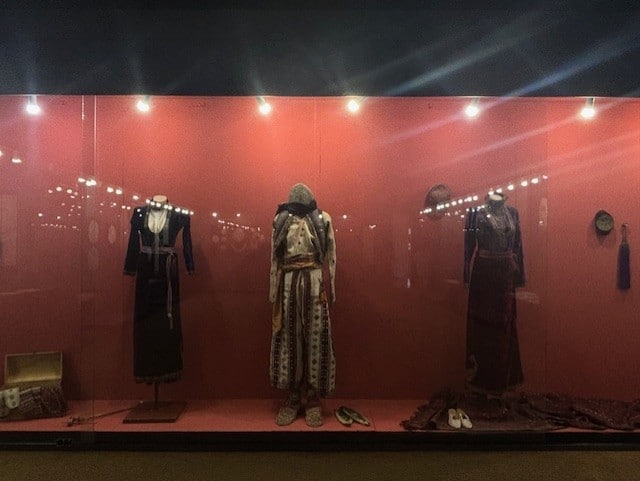
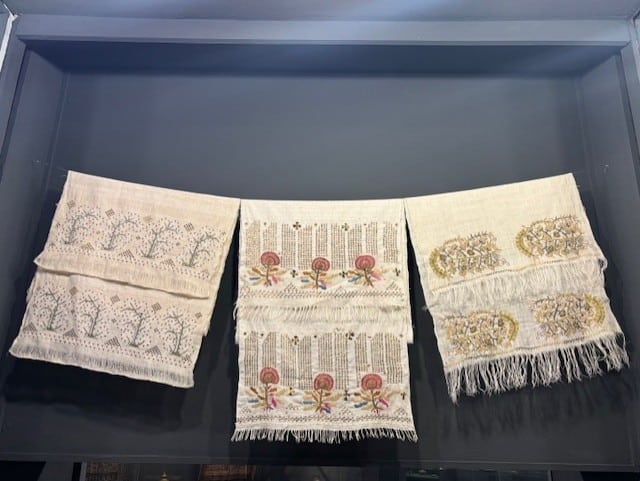
The first room focuses on Armenian textile art and the various embroidery and lacemaking traditions. From the museum signage, displayed in both Armenian and English, one can learn that embroidery and lace making are some of the oldest and longest-practiced areas of Armenian folk art, going back hundreds of years, and that it has been a longstanding folk tradition to decorate nearly all household textiles with intricate embroidery or lace. There are numerous lacemaking techniques displayed, from needle lace to bobbin lace and crochet, each with its particular history and household use explained. Embroidery too had a wide range of styles and traditions, from simple cross stitch, to the delicate white Ayntap embroidery, to the intricately colorful Marash embroidery. The embroidery room also showcased several sets of Armenian traditional costumes and accessories like belts, headbands, and shoes.
The second room showcases Armenian silver and metalwork. Metalwork has held a unique place in Armenian heritage and is used both as a decorative art and for the making of household items like cookware and vessels. Much of this room is taken up by an impressive collection of traditional jewelry, which would accompany the traditional costumes of the previous exhibit room. The jewelry is made in an intricate silver filigree style, adorned with gemstones and elaborately constructed. Many motifs are inspired by nature, with pieces often depicting floral and botanical designs as well as more geometrical and abstract constructions. These decorative techniques are also applied to objects like dagger sheathes, small boxes, and numerous household goods from goblets to trays to cookery. Part of the metalwork exhibit showcases the art of Vahan Hatsagortisian and Artzruni Berberyan, two 20th-century metal artists who were each inspired by their native Armenian folk traditions and who both played significant roles in preserving as well as reimagining Armenian metalwork.
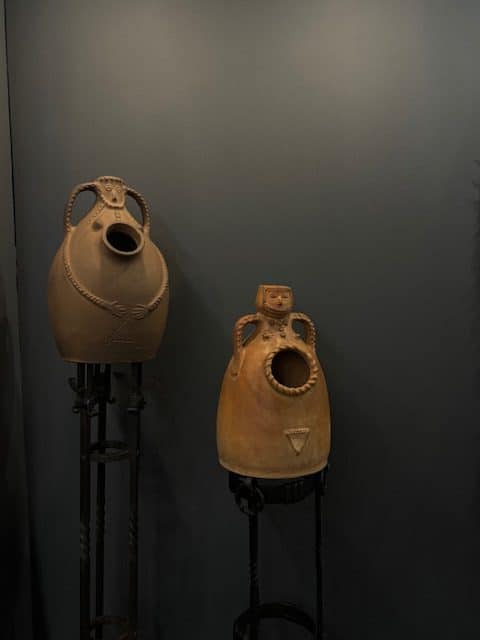
The third and final room of the major exhibition space is dedicated primarily to woodcarving. Woodcarving has been used as a primarily decorative tradition for many centuries, adorning homes and furniture with botanical and floral motifs, geometric forms, and interlocking designs. Carvings also decorated wooden household items such as storage vessels and plates, religious items such as Bible covers and icons, and purely decorative objects within the home and public spaces. This room also showcases a number of clay vessels, mainly practical in nature but also incorporating creative elements, such as salt vessels with female forms.
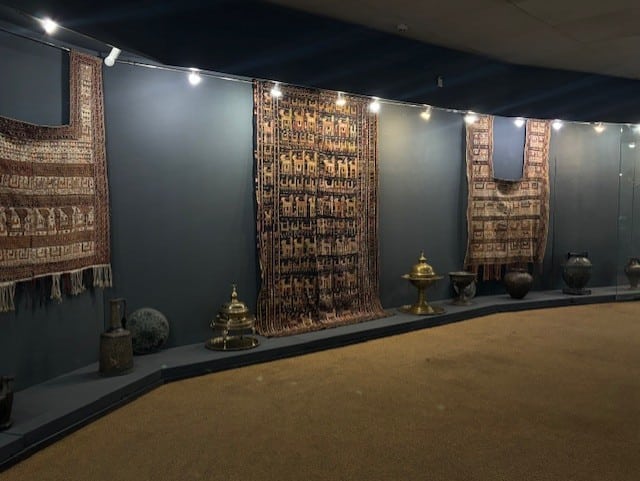
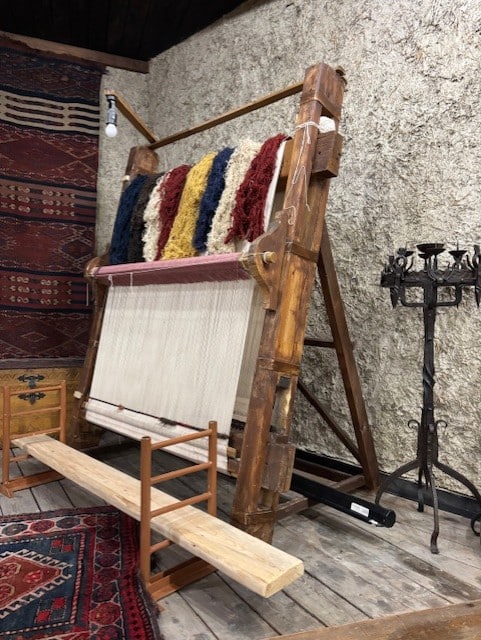
The museum has an impressive collection of traditional Armenian rugs. They are spread out through the various rooms in the museum, with the main exhibit in a downstairs hall that also displays a large traditional loom, demonstrating how such looms would occupy a traditional Armenian home. Armenian carpets are traditionally crafted from pure wool and feature deep, rich colors and unique folk motifs. Many of these rug patterns are primarily geometric in nature with repetitive designs, but there is also a long practice of incorporating images from nature and folklore and even animals and human figures in Armenian rugs. Some rugs depict dragons, a significant element of Armenian folklore.
Cultural Mission of the Museum
In speaking to an employee of the museum during my visit, I learned that before the official museum was founded in 1978 the space had been used as a center both for making folk art and educating the public about folk art. After its conversion to a museum, this history of folk art as a living practice has been maintained. The museum seeks to ensure that not only are historical objects preserved, but that the knowledge itself is passed down and strengthened in Armenia. Though some of the rugs on display are historical examples, others were created at the museum as a part of an effort to preserve traditional folk practices in contemporary Armenia. The carpets in this collection, as well as the loom in the downstairs exhibit space, are reminders of the museum’s origin as a center for the practice of folk art and its present-day mission to preserve and revive these crafts.
In addition to its rich collection, the museum still engages in various methods of practicing and spreading Armenian folk culture. They host solo exhibitions of folk artists, lectures and promotions for books and traditional music, and host workshops with folk masters at the museum. These education efforts have been carried out by the Department of Preservation and Popularization of Folk Art since 2017. The museum seeks to ensure that not only are historical objects preserved, but that the knowledge itself is passed down and strengthened in Armenia.
You’ll Also Love

Museums as Self-Care
In 2018, doctors in Montreal began prescribing visits to the Montreal Museum of Fine Arts (MMFA) for patients experiencing depression, anxiety, and other health issues. This innovative approach to mental health treatment was launched under the initiative of the MMFA in collaboration with Médecins francophones du Canada (MFdC). The program allows physicians to provide patients […]

SRAS Visit to Erebuni Museum Complex and Archeological Ruins
The fortress of Erebuni, once the great capital of the mighty Uratu Kingdom, is located on the outskirts of Yerevan. The ruins of the citadel are flanked on one side by quiet mountains – their rocky slopes reaching up toward the hot summer sun. On the other side is Yerevan and the Ararat plain. The noise of […]
The Hovhannes Sharambeyan Museum of Folk Arts in Armenia
The Hovhannes Sharambeyan Museum of Folk Arts is located on the outskirts of Yerevan, serving to preserve both tangible and intangible elements of Armenian cultural heritage through a rich collection of historic objects across all areas of Armenian folk art including textiles, woodcarving, and metal working. They also work to preserve traditions, sometimes hosting book […]

The Armenian National Academic Theater of Opera and Ballet
In the heart of Armenia’s capital city Yerevan, stands the Armenian National Academic Theater of Opera and Ballet and the Aram Khachaturian Concert Hall, simply known as “The Opera” by locals. Built in the early twentieth century, this cultural hub showcases a blend of traditional Armenian architecture and contemporary design representative of its diverse repertoire. […]

Book Review of Lavash at First Sight
Taleen Voskuni’s Lavash at First Sight (2024) is a funny and lighthearted sapphic romance about two Armenian-American women roped into promoting their respective Armenian food companies at a food-packing conference in Chicago offering a chance to win a Super Bowl advertisement slot. The two are just hitting it off when the parents of one recognize […]


