


The Georgian Museum of Fine Arts houses one of the largest private collections of unique and modern Georgian art from over the past 70 years. The museum has a standard admission fee of 40 lari and is accessible to students for 15 lari. From the moment you enter, the museum has a very modern feel with bright white walls and a sleek glass staircase towering at its center. As with most multi-leveled museums that I have been to here, the staff recommends starting at the top floor and making your way down floor by floor. Each room houses the work of a specific artist or group of artists with a little overview of the artist’s education and life at the entrance of each room.
Starting at the top fifth floor, we are introduced to Georgian Soviet Nonconformist Art, which pioneered new techniques and innovative forms of expression even under the severe censorship of the Soviet era. The first piece that caught my attention was Apollon Kutateladze’s Battle of Queen Tamar. Although painted in 1970, this magnificent work depicts the golden age of Georgian history hundreds of years ago under Queen Tamar’s reign, the first and only woman to rule in Georgia. A massive painting, it stretches nearly 16 feet in length, with Tamar and her entourage flanked by massive numbers of nobles with bold yellows, whites, and reds dominating a surprisingly simplified canvas. This floor also features the art of Temo Japaridze, a modern multidisciplinary Georgian artist whose works range from whimsical Tim Burton-esque pieces to stark geometric abstractism.
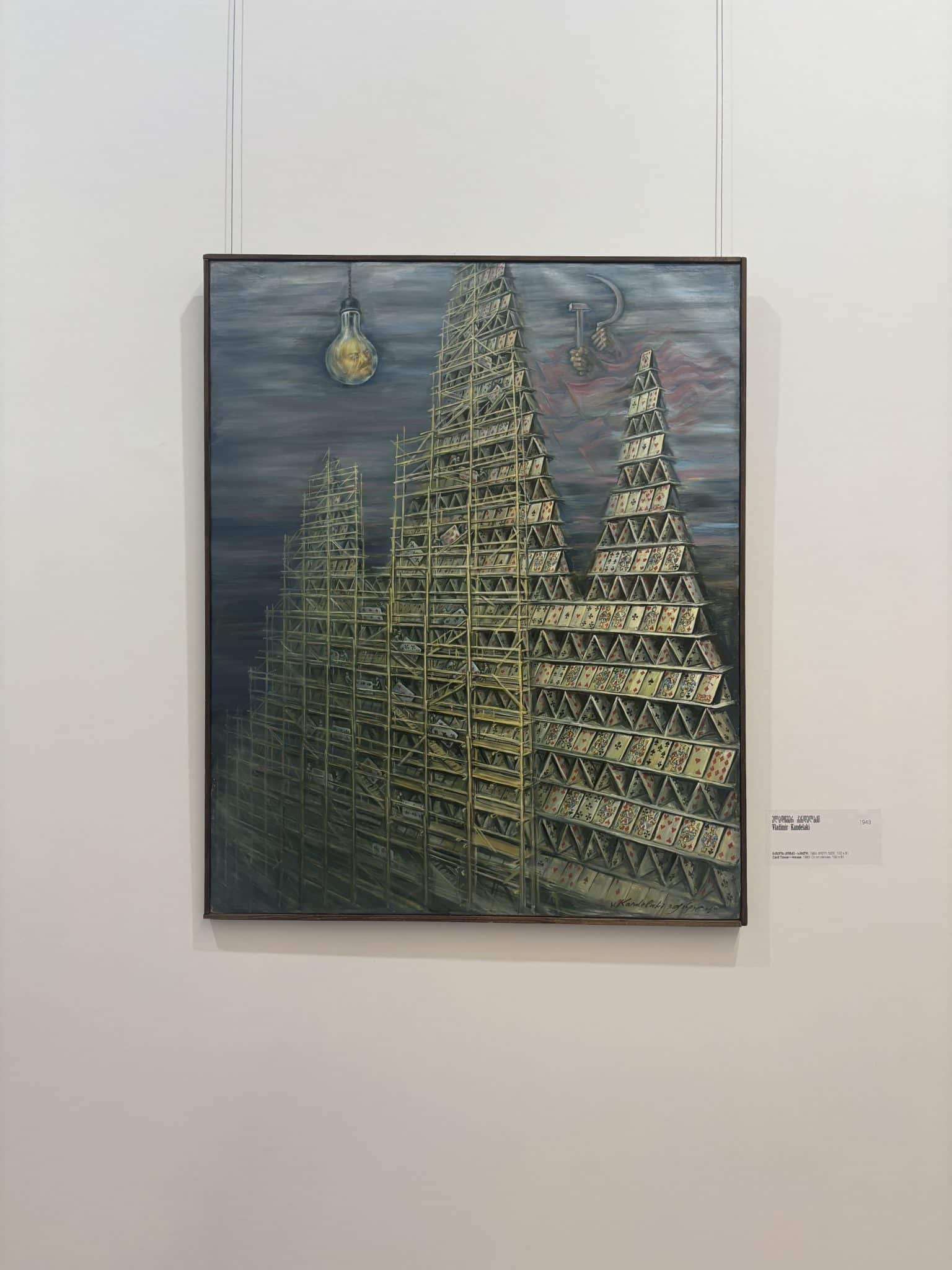
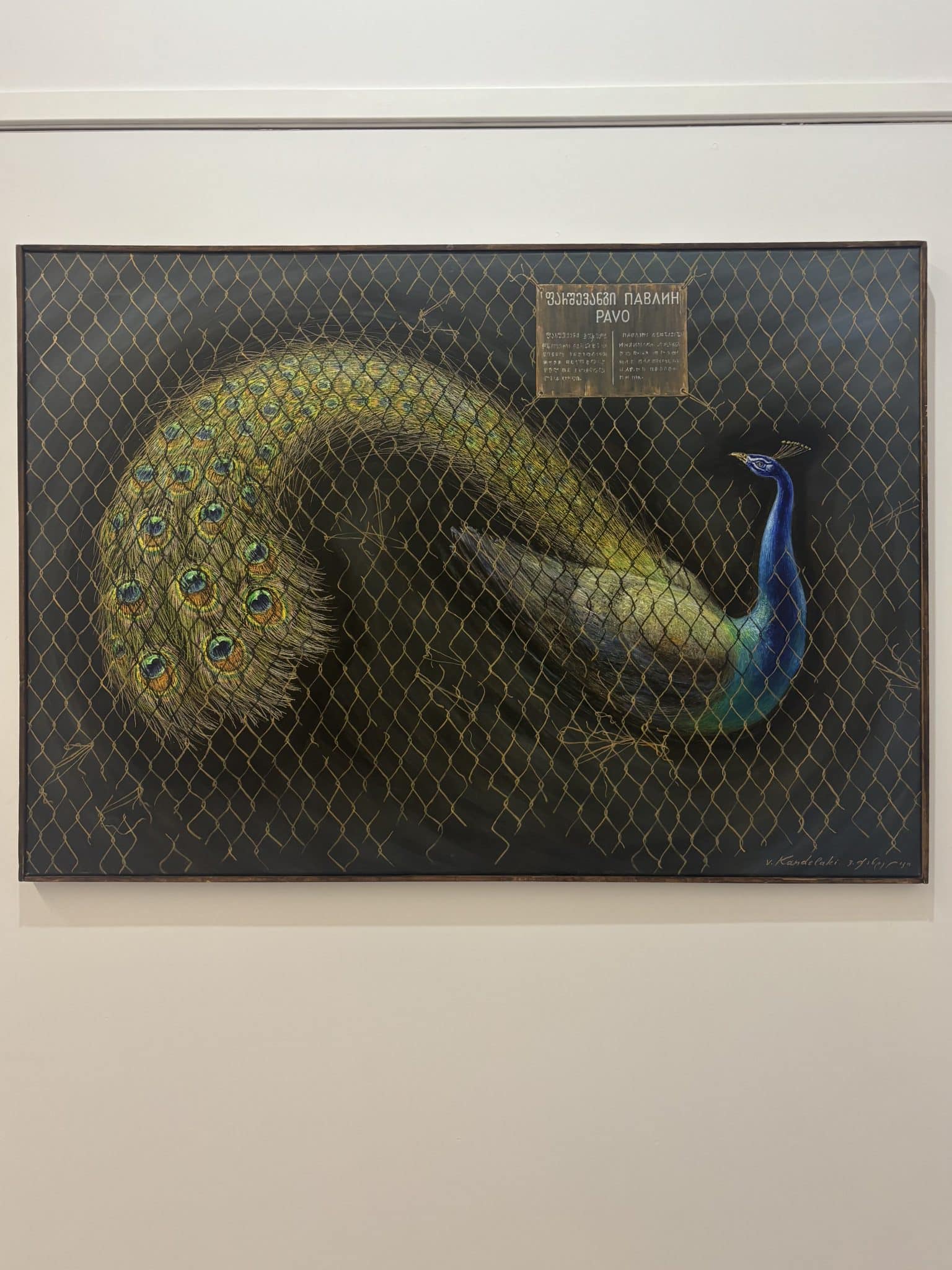
Walking down to the fourth floor, there is a transition to a more radical nonconformist art. The work of Vladimir Kandelaki is strikingly symbolic. In one mixed-media piece, a table with samovars protruding from the canvas reflects the likeness of two other paintings hanging on the wall next to it. One is a house of cards, symbolizing the fragility of the Soviet Union and ideals of Lenin. The other image is a caged peacock, representing the imprisonment of beauty. A room over, Otar Chkhartishvili’s rendition of the Last Supper immediately grasps your attention. The ghastly multimedia piece depicts the disciples with gas masks directed at the Christ-like figure in the center, visualizing the contemporary ideological confusion and underground struggles. Most of the art on this floor, in fact, is glaringly protest art.
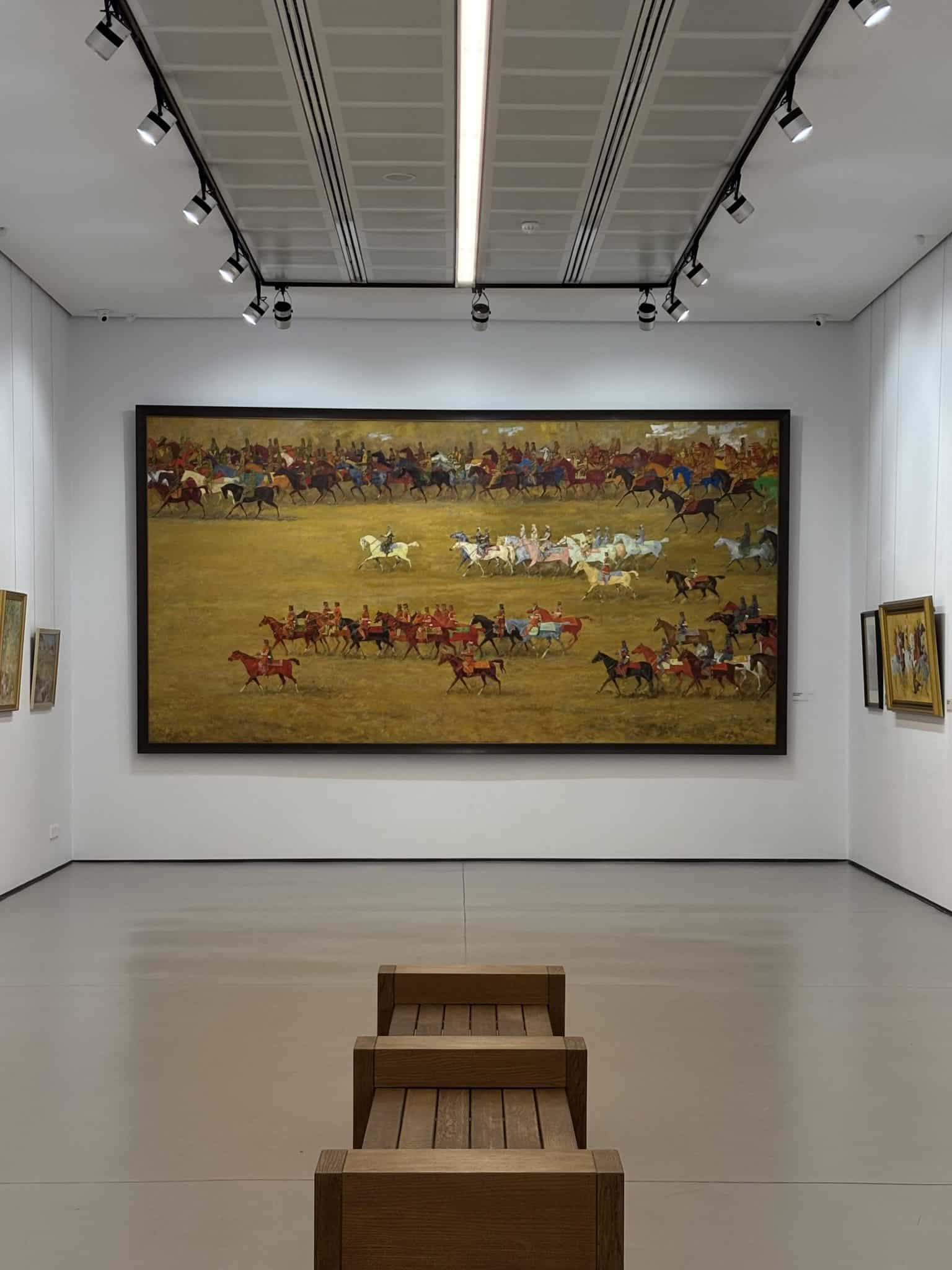
Descending to the third and final exhibition floor, there is a more playful and relaxed atmosphere, with pieces from the post-Soviet period. A work by Tato Akhalkatisishvili, for instance, captures a quiet sunset in the forest by railroad tracks. It evokes a calm sense of nostalgia.
The second floor is administrative and first floor has the Museum Café, gift shop, and a temporary exhibition space. At the time I visited, a Georgian artist named Leila Shelia, from the Abkhazia region, was being featured there.
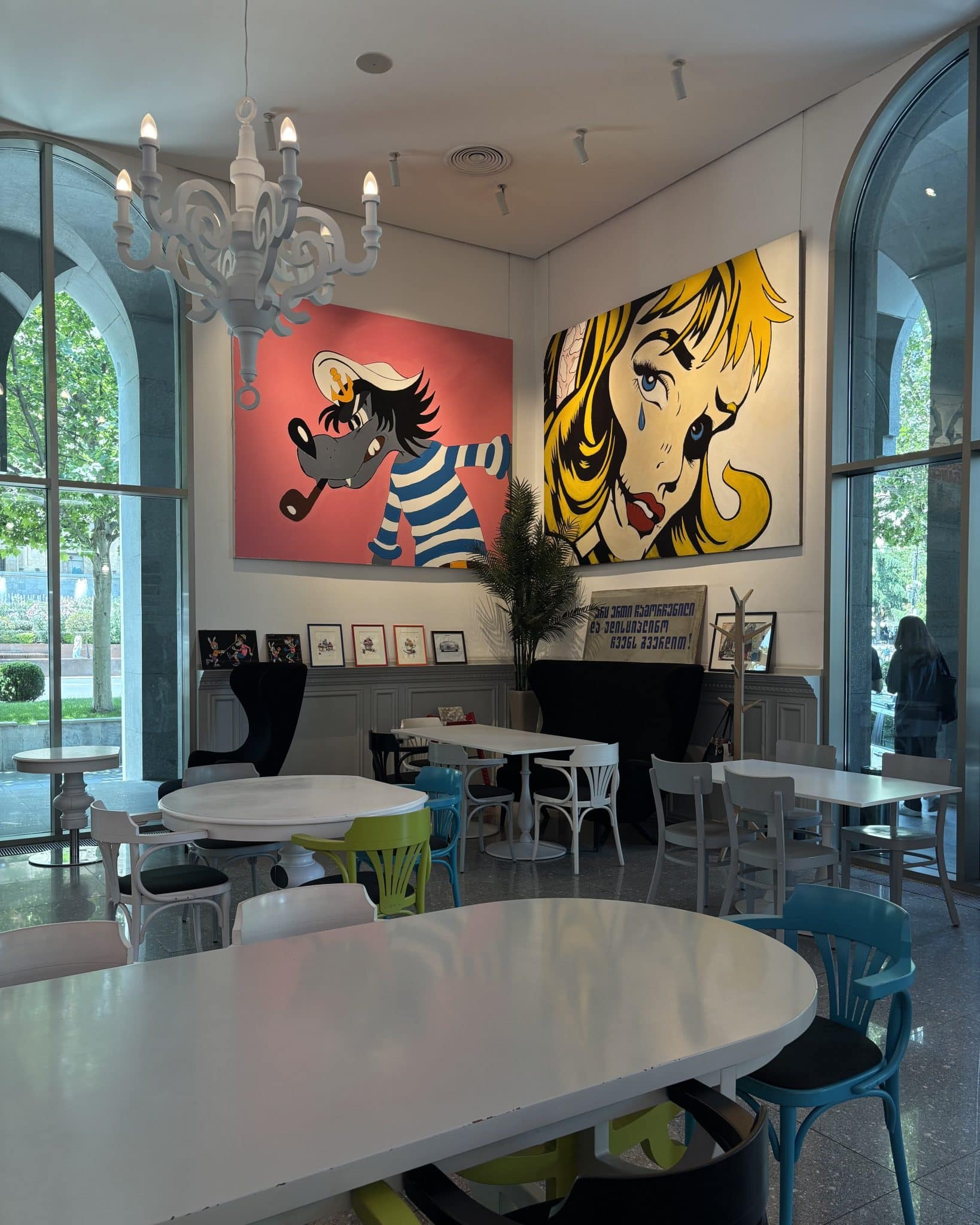
If you are looking for a study spot after exploring the museum, the Museum Café, also on the first floor, offers a variety of refreshments. Artsy and modern, you can lounge amid bright, vintage posters from the Soviet era and atmospheric neon signs. The cafe offers a variety of sweet treats, lunch options, and more, and there is a quiet patio area if you prefer to study outside.
From top to bottom, the museum is a time capsule of Georgian artistic and cultural expression, specifically around the period of Soviet occupation. Whether you are looking for a museum side quest or a new study spot, the Georgian Museum of Fine Arts is the perfect location, encapsulating artistic expression in the culturally rich Caucasus.
You’ll Also Love

Museums as Self-Care
In 2018, doctors in Montreal began prescribing visits to the Montreal Museum of Fine Arts (MMFA) for patients experiencing depression, anxiety, and other health issues. This innovative approach to mental health treatment was launched under the initiative of the MMFA in collaboration with Médecins francophones du Canada (MFdC). The program allows physicians to provide patients […]

The Simon Janashia Museum of Georgia (The National Museum of Georgia)
The Simon Janashia Museum of Georgia is a great first stop in Georgia for an essential overview of the country’s place not only as a small country that has long lived at the crossroads of great empires but also as a modern nation with a layered millennia-old history unto itself. The museum shows the highlights […]

The Opera and Ballet Theater of Tbilisi
The Opera and Ballet Theater of Tbilisi has a rich history and offers a diverse range of opera and ballet performances – from traditional masterpieces to innovative contemporary offerings. Built in the late 19th century, the theater showcases a stunning blend of neoclassical and Moorish architectural styles as well as opulent interiors, creating a majestic […]

Georgian National Gallery: A Unique Artistic Vision in Tbilisi
Centrally located in a historic building on Shota Rustavelli Avenue, the National Gallery is one of many museums that are unified under the Georgian National Museum. It is known for its collection of historic and contemporary Georgian art, from paintings and drawings to sculptures, as well as a number of original works by famed Georgian […]

Book Review of Hard by a Great Forest
Hard by a Great Forest, by Leo Vardiashvili, is a wonderful, horrible book. The book is wonderful in that it presents believable, likeable characters who are continually placed in extraordinary situations. We are compelled to root for them as they move from one to the other and as we turn page after page. The book […]
