


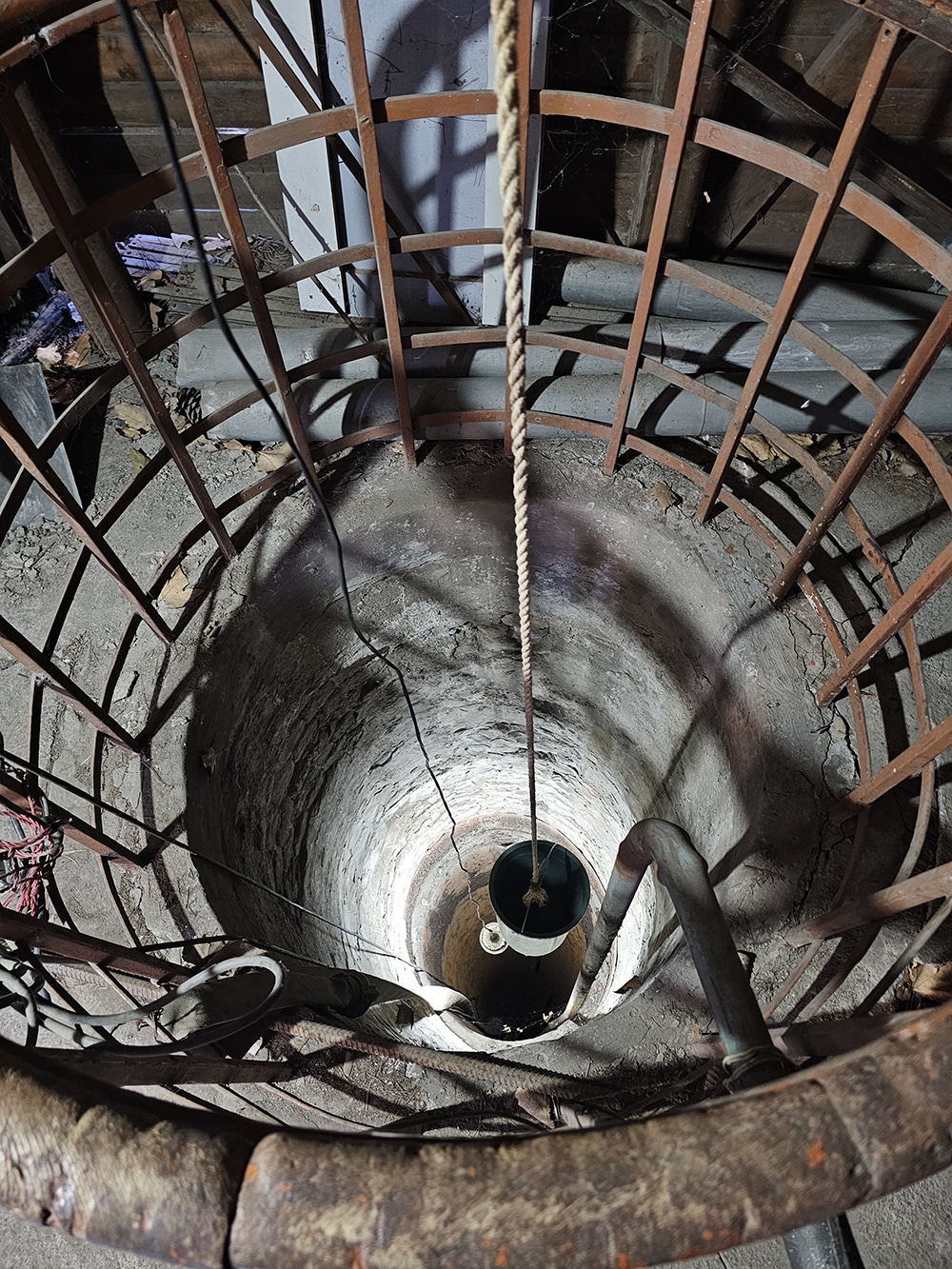
Several years ago, when visiting Gori, Georgia, the birthplace of Stalin, I learned there was another place associated with him in Tbilisi, an underground printing press, that was once accessible, apparently, only by lowering oneself down a well and traveling through an underground passage. The Russian Revolution, hidden places, typography – this place ticked a lot of the interest boxes for me and yet it lingered on my “must visit” list for quite some time.
I found myself on a recent trip with a bit of time and set out to visit what is now referred to as the Underground Printing House Museum. My expectations were actually quite low, thinking it may, especially given current attitudes toward Russia in Georgia, be a dusty relic. Simply entering the space, however, brought back memories of other places I’ve visited that commemorate Soviet leaders, such as Stalin’s dacha in Sochi, or Lenin’s dacha in Gorki Leninski, outside Moscow. What has always struck me about these places is the extent to which they “humanize” these larger-than-life figures that had such an impact on world history. They are suddenly mere mortals that also eat and sleep, love and lose, and believe in something, right or wrong.
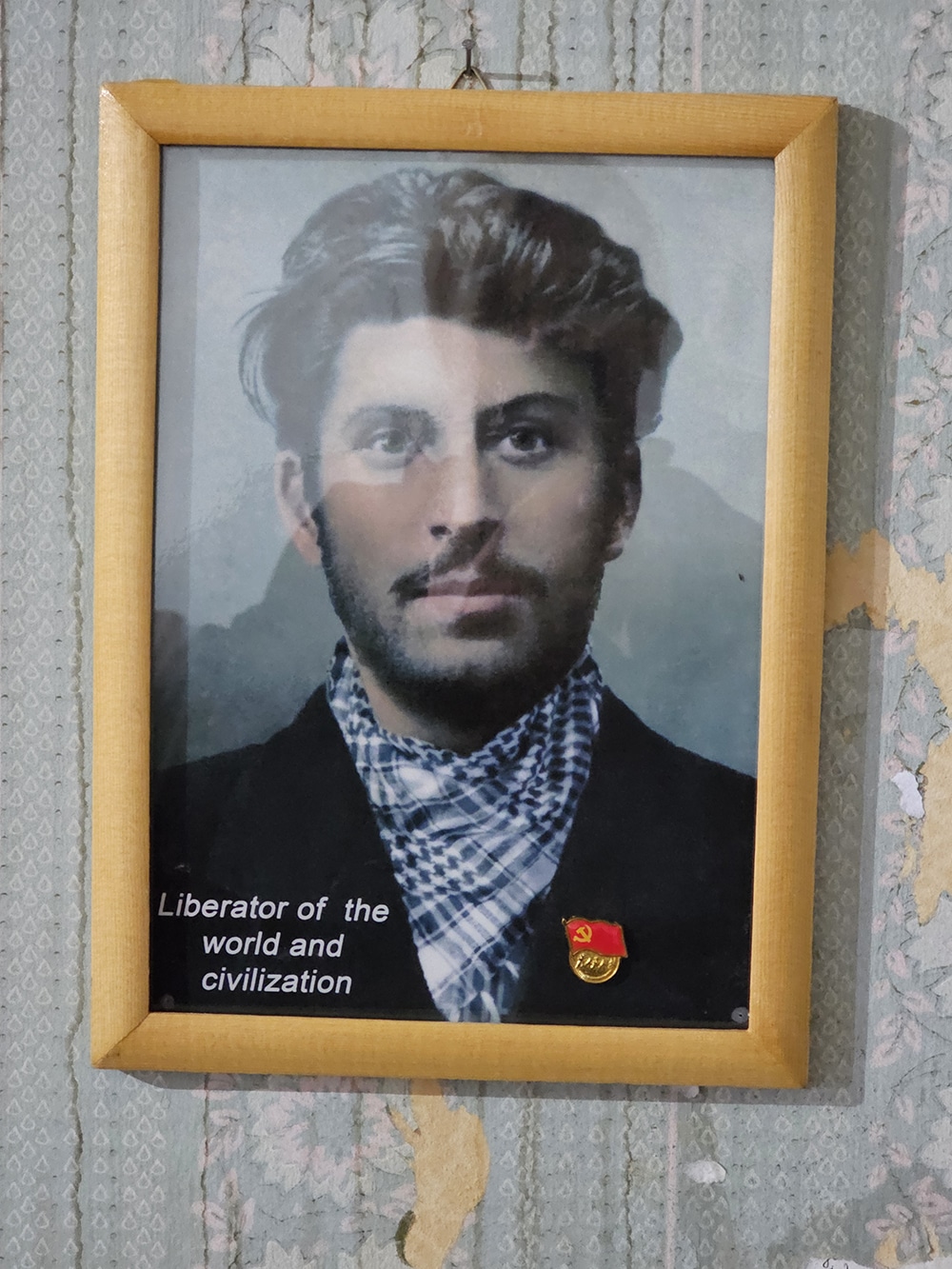
The upper part of this museum includes a room where the young Joseph Stalin (Iosif Djugashvili) slept. There was nothing remarkable about the space, though I noted that based on the size of the bed, it was a good thing he was pretty short. I studied the picture of the young Stalin and thought to myself that he was actually quite handsome back then.
I moved on to the part of the museum documenting the actual activity that took place beneath that bedroom. Luckily they have installed some actual stairs to reach it without having to climb a rope or ride in a bucket.
Beneath the House
The underground printing house operated from 1903 to 1906, when Tbilisi, then known as Tiflis, was part of the Russian Empire. It produced illegal revolutionary literature for the Caucasian Union Committee of the Russian Social Democratic Labor Party.
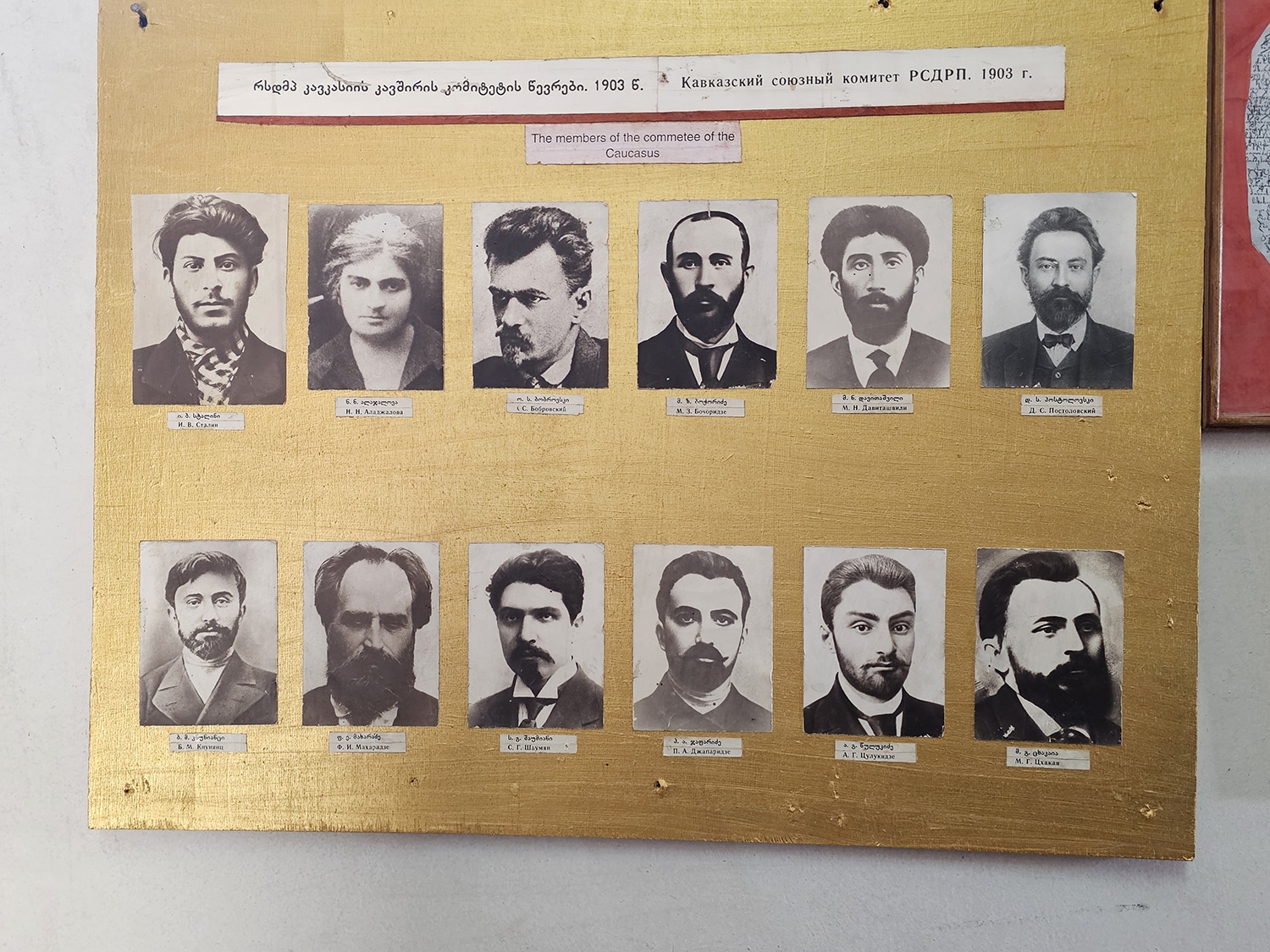
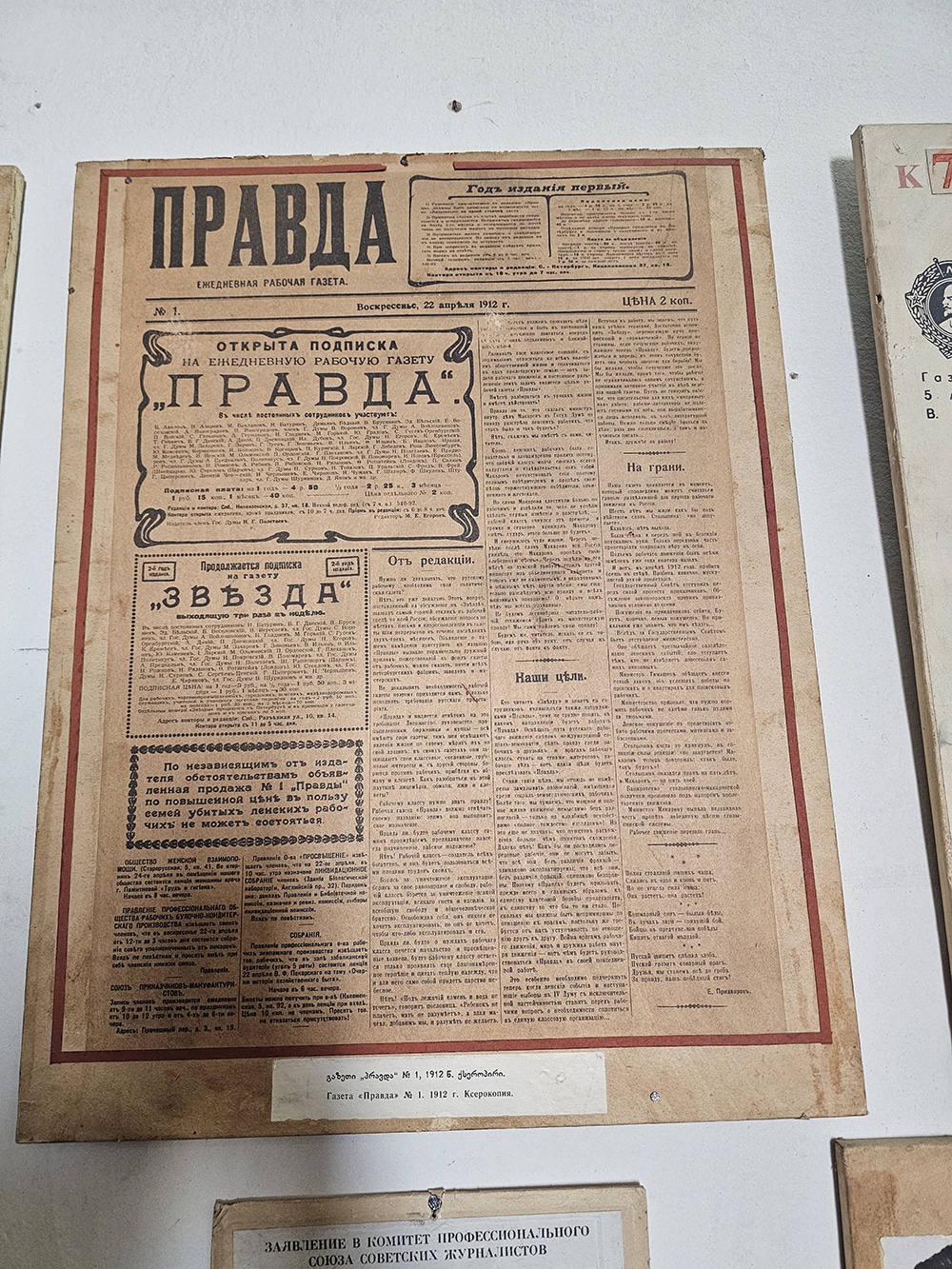
Often called Stalin’s Underground Printing House, the museum connects the site with the future Soviet leader’s early revolutionary activity. Its displays also introduce a wider cast of organizers through photographs, documents, and correspondence.
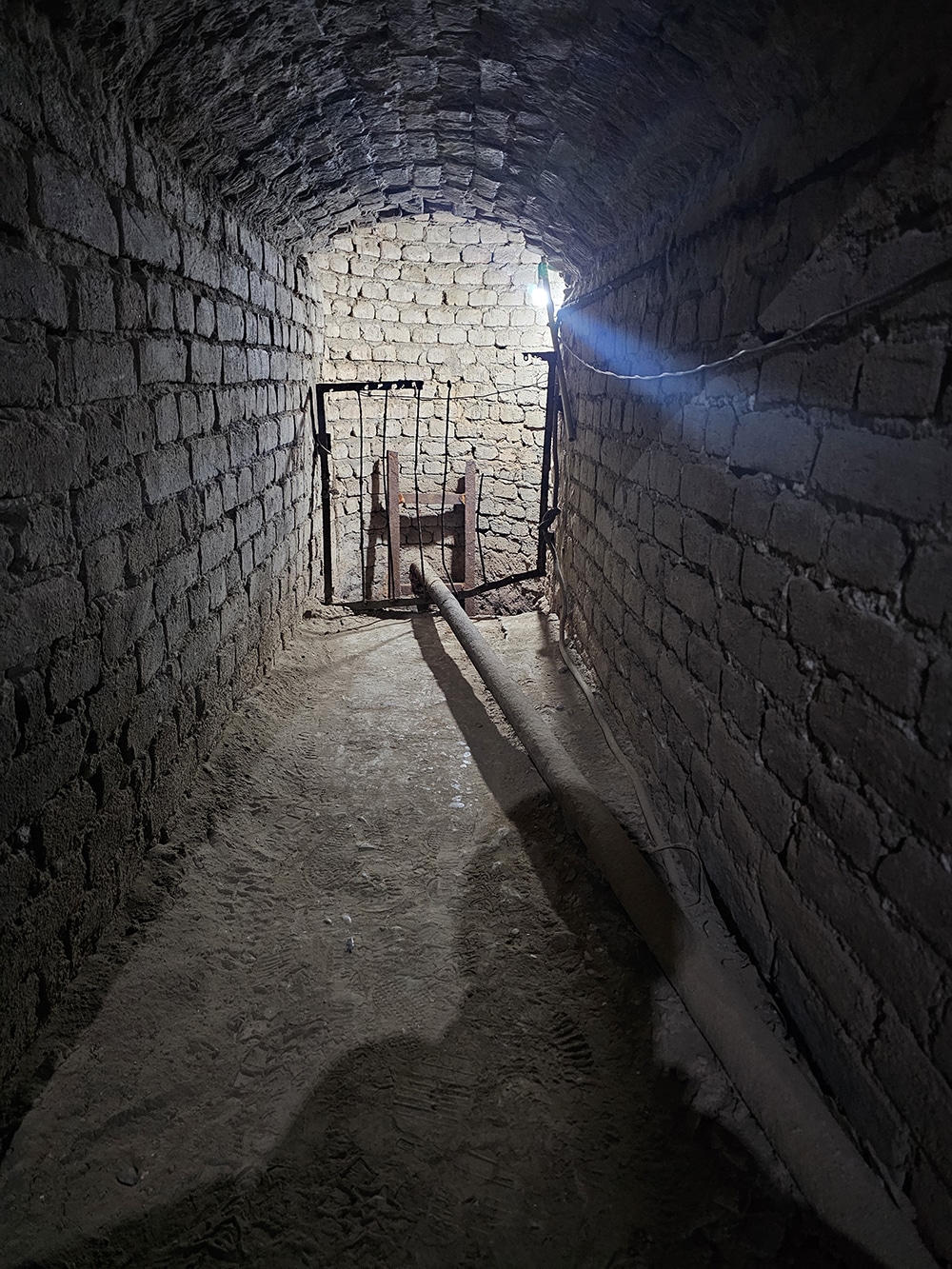
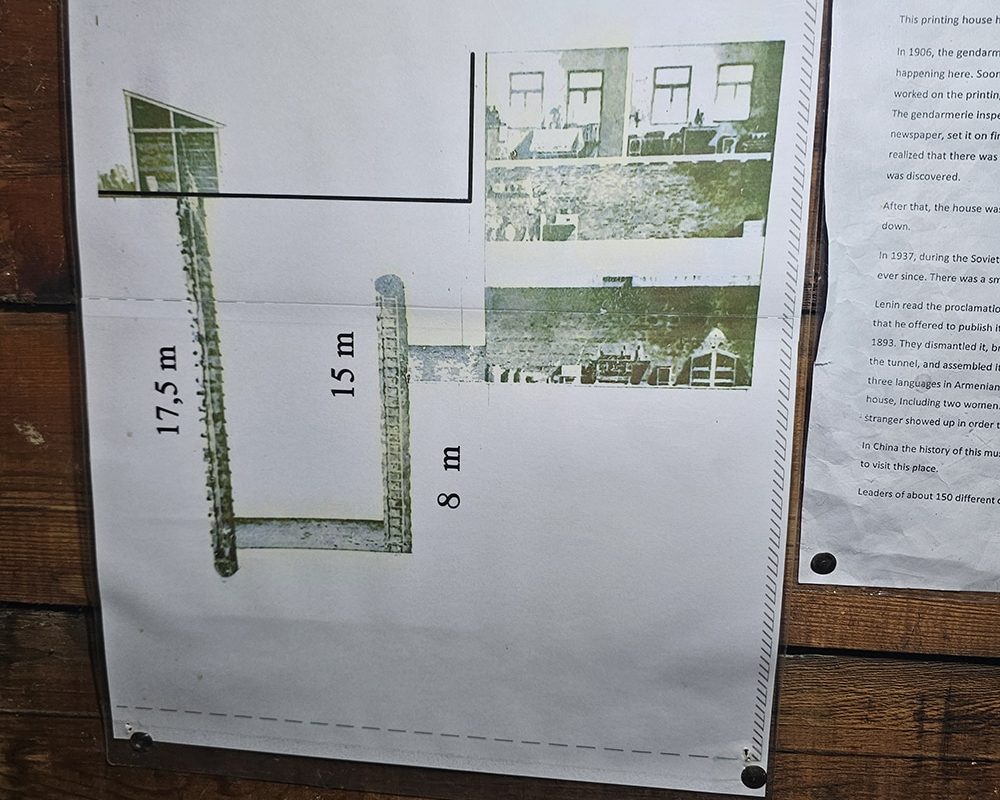
For someone drawn to concealed spaces, the well and underground passages are an immediate attraction. A cross-section displayed in the museum explains their arrangement: a passage from the well connects to a second shaft, which rises toward the printing chamber beneath the house.
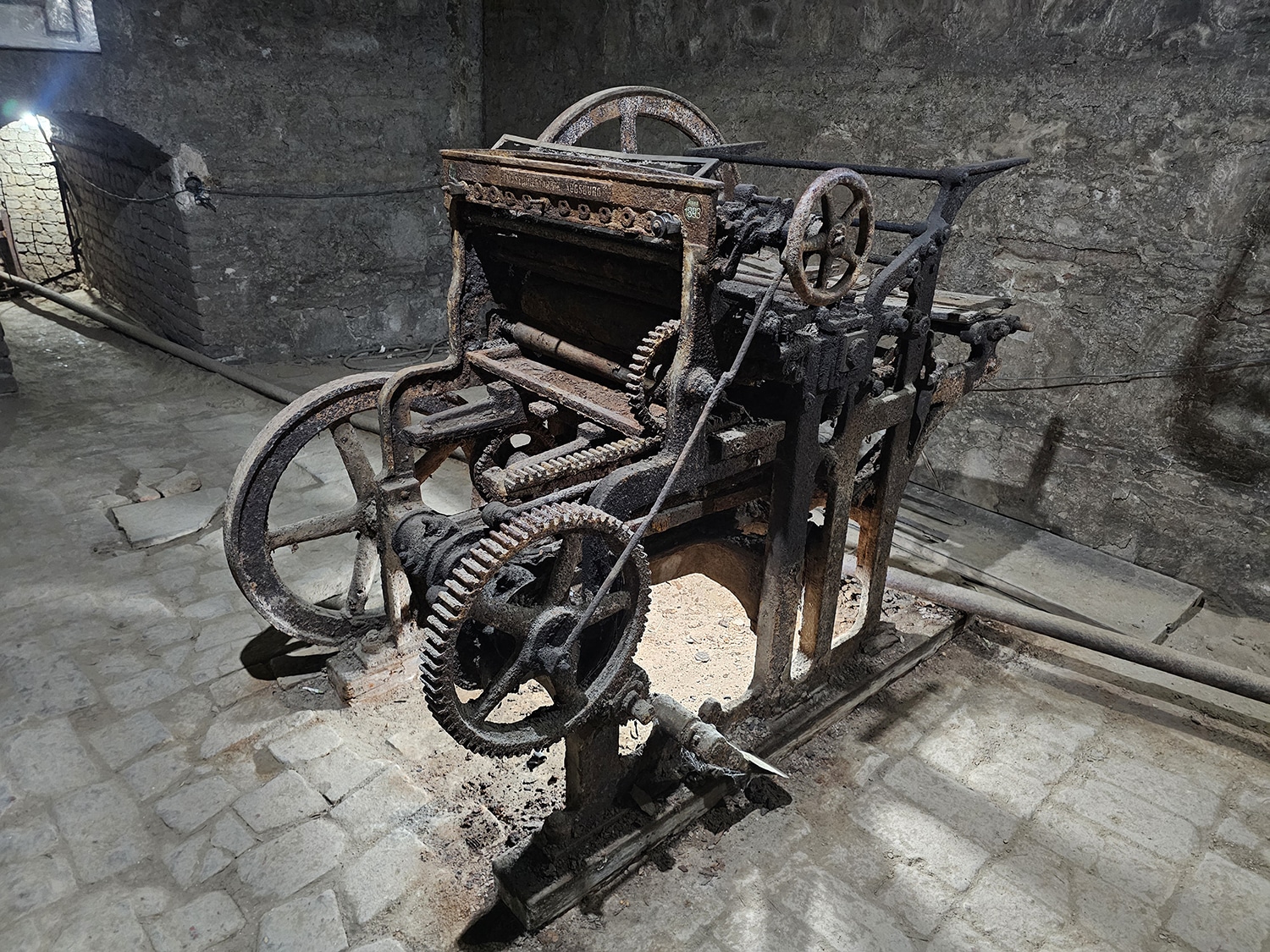
Seeing the machinery adds another dimension. Many years ago, I was a customer of an older-style print shop. The owner proudly showed me his press and how it worked. Still, this was nothing like what my grandfather worked on when he produced the local paper in his small town. The process by which entire publications materialized using that technology still fascinates me. Here, I found myself thinking about the work required before any page could reach a reader. Composing and setting text in Georgian, Russian, and Armenian meant working with three scripts, alongside the practical demands of operating a clandestine press.
The press itself would have had to have been somehow brought down and installed. Paper and ink had to arrive regularly. Printed material had to leave. Workers needed light and ventilation, and the operation had to remain concealed through all of it, moving through what was not exactly a passageway conducive to wheeling carts of heavy paper.
From One Room to Many Readers
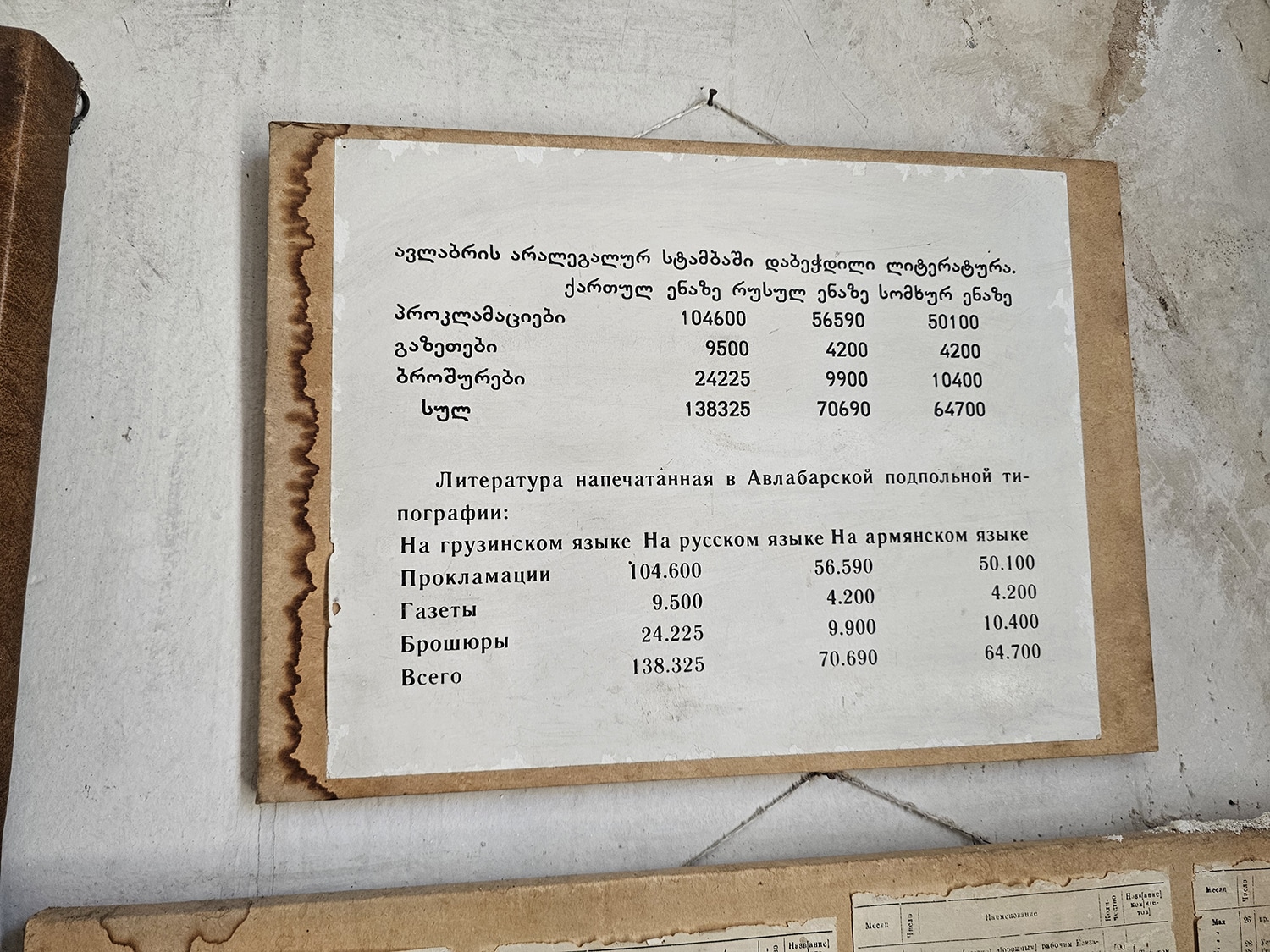
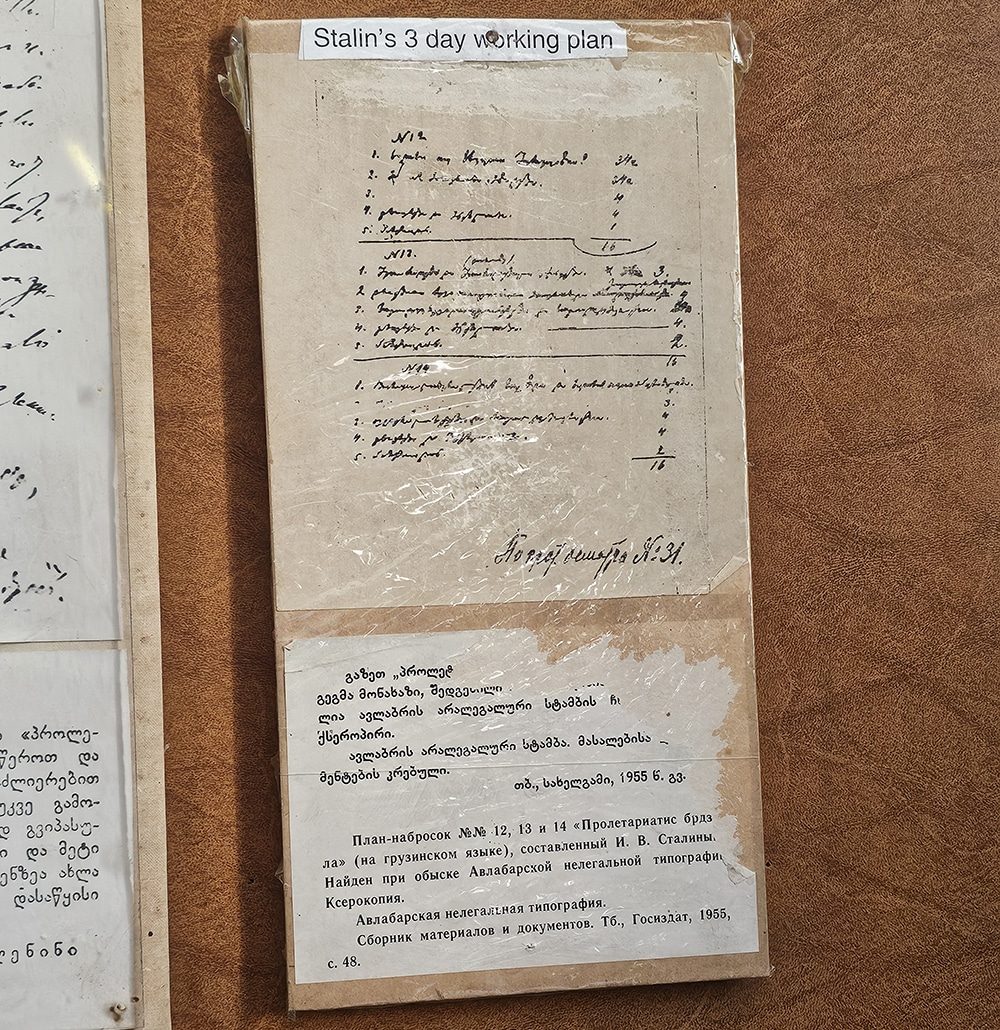
A production chart on display lists proclamations, newspapers, and brochures in all three languages. I added up the figures: 273,715 items, including more than 211,000 proclamations. The chart does not specify the period covered, and I assume these are printed copies rather than separate titles. Even allowing for those uncertainties, it was considerably more than I had imagined coming out of this concealed room.
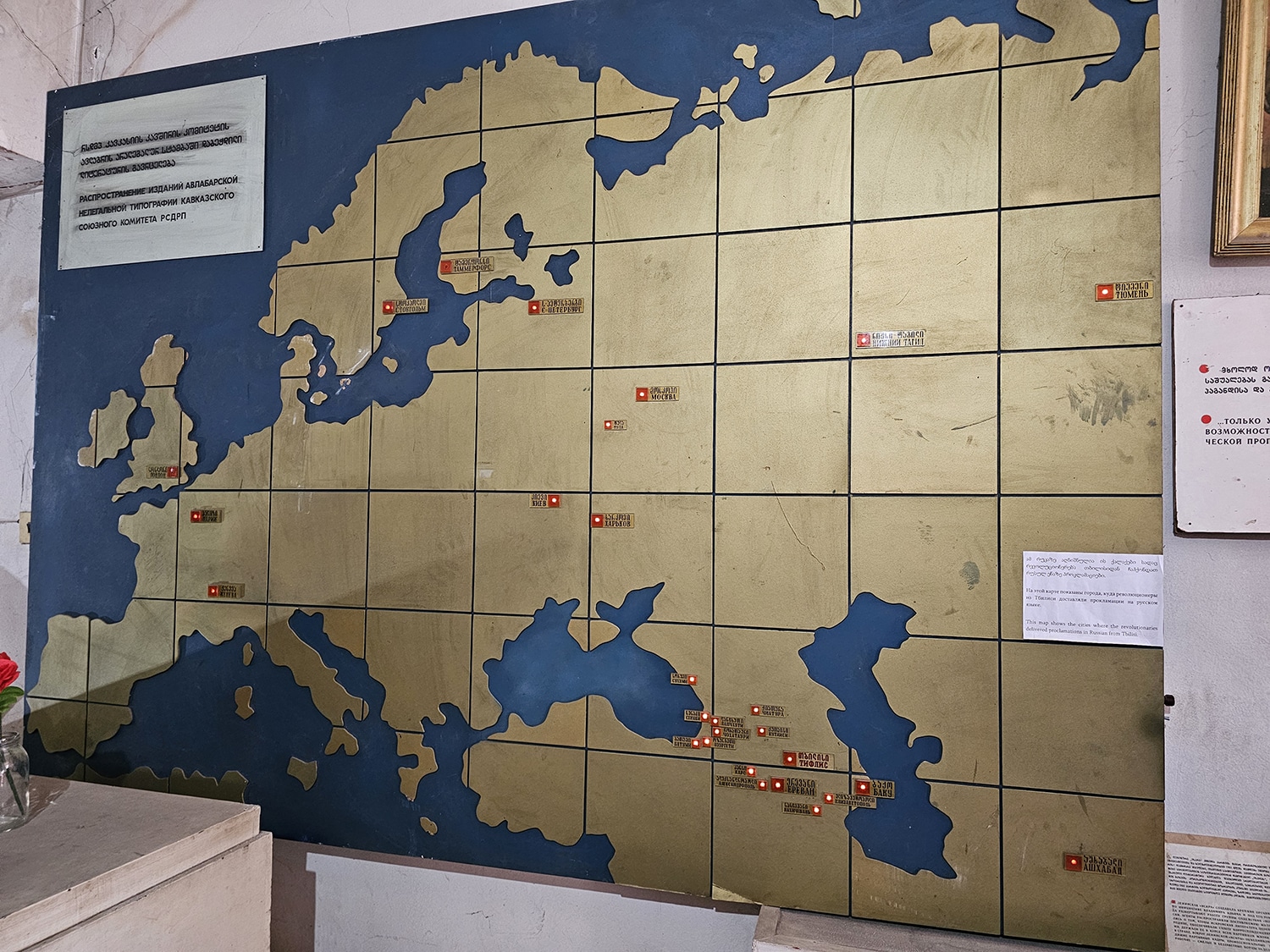
Then I looked at the large wall map showing where the publications went. I expected destinations around the Caucasus, and there were plenty, including Baku. But Moscow, St. Petersburg, and cities in Western Europe were marked as well. According to the accompanying label, revolutionaries delivered Russian-language proclamations from Tbilisi to these places. I wanted to know more about that distribution process.
There is also a letter from Lenin to the Caucasian Union Committee, sent from Geneva and dated December 20, 1904. It discusses editorial matters and asks for more correspondence from workers. I enjoyed this glimpse of the practical business behind the publications: requesting contributions, exchanging letters, and trying to get enough material together. Some aspects of putting out a publication have apparently changed very little.
Before the Share Button
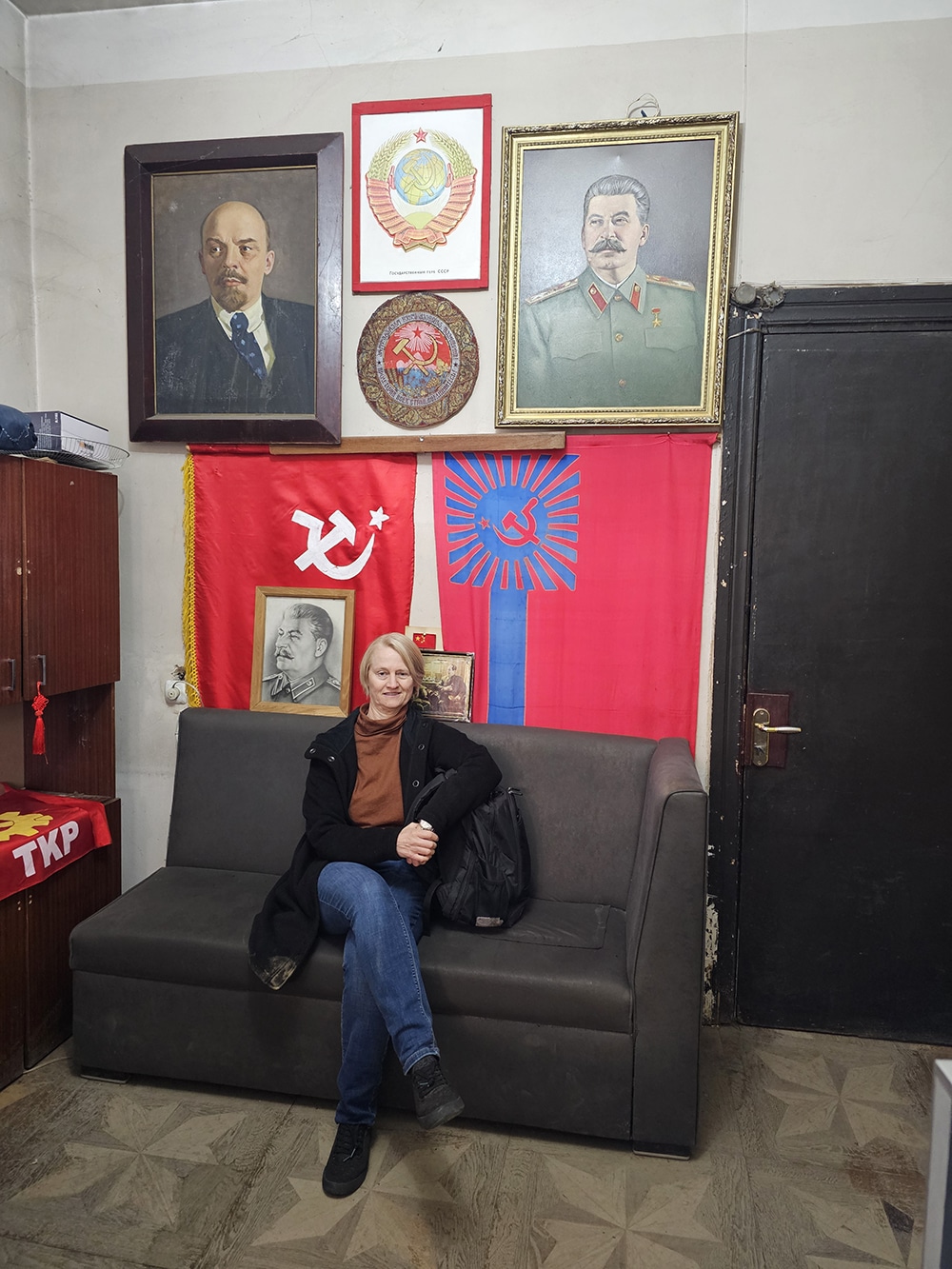
Looking at the press, I returned to a question I have often wondered about: what could the propagandists of the twentieth century have done with the internet? Here were people going to extraordinary lengths to print and distribute messages that today could reach millions almost instantly.
Of course, online messages can also be tracked, blocked, or removed, though those controls are uneven and often ineffective. The struggle over who can circulate what is familiar. The speed and scale would have been difficult for the people working in this room to imagine.
Looking between the production chart and the map, I tried to imagine bundles of paper being concealed and carried to those destinations. How many people helped them along the way? And how many read or heard their contents, as leaflets passed from hand to hand or were read aloud? I wondered, too, how many copies survived.
A Few Unanswered Questions
The museum’s admiration for Stalin is hardly subtle. The portrait I had studied upstairs carries the English caption “Liberator of the world and civilization.” That rather sweeping endorsement sits alongside the bedroom, photographs, and other details that had made him seem so human when I first entered.
I would have welcomed more explanation, particularly about the production figures and distribution arrangements. My grandfather might have helped me understand the machinery, but I wanted to know more about the people who kept the whole operation going, from preparing the texts to getting them into readers’ hands.
For a place that had spent so long on my “must visit” list, it gave me plenty to think about. The hidden passages had helped draw me there. What stayed with me was the effort involved in getting ideas out of that room and into circulation—and just how far they traveled.
You’ll Also Love
Maia Tsinamdzgurishvili: Elevating Silk Threads to Art
Maia Tsinamdzgurishvili is a modern Georgian textile artist living and working in Tbilisi. I had a chance to visit with her in her apartment in Tbilisi in the hopes that I might learn not only about her own work, but about the state of modern textile arts in Georgia. During my time with Maia she […]

The Opera and Ballet Theater of Tbilisi
The Opera and Ballet Theater of Tbilisi has a rich history and offers a diverse range of opera and ballet performances – from traditional masterpieces to innovative contemporary offerings. Built in the late 19th century, the theater showcases a stunning blend of neoclassical and Moorish architectural styles as well as opulent interiors, creating a majestic […]

How to Change the Caucasus’ Image
The Village is a Russian-language publication in Moscow, St. Petersburg, and Kiev that seeks to inform locals about their various cities, upcoming events, urban changes, and history. The following is an interesting entry from a series of articles which The Village introduces with the following statement: “Until recently, it seemed that everyone copied Moscow and St. Petersburg, and ultimately, everyone […]

The State Silk Museum in Tbilisi, Georgia
The Georgian State Silk Museum celebrates and supports sericulture (the process of making silk) as an act of biology, engineering, handicraft, and art. Its displays take you through the lifecycle of the silk-worm to the gathering, weaving, and dying of silk threads to the final cultural products sericulture produces. The facility also hosts a reference […]

Museum of Georgian Medicine: Two Stories Told
Two visitors had two very different experiences at the same museum – visiting just days apart. The Museum of the History of Georgian Medicine examines Georgia’s long history through the context of medicinal practices. Along the way, we learn quite a lot of Georgia’s identity and even genetic makeup. This particular museum is a reminder […]
