

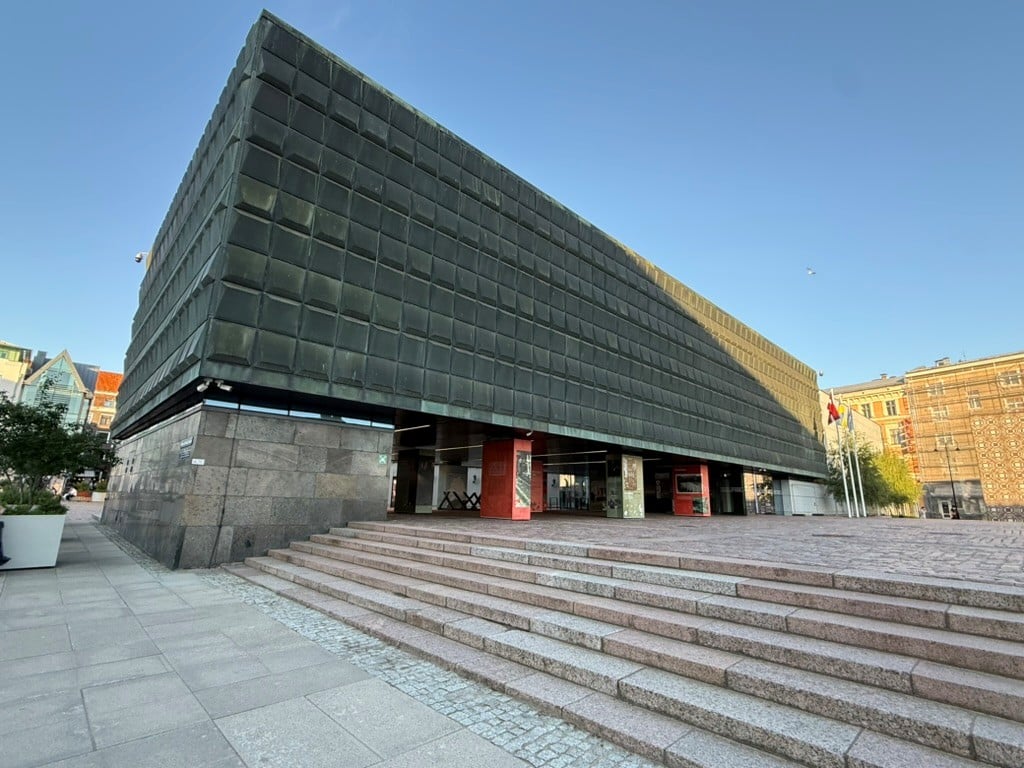
The Museum of the Occupation of Latvia is a modern museum that tells the story of a past filled with loss, resilience, and survival. While the museum itself is not very big, it has been carefully designed in a chronological narrative that guides visitors through an emotional journey, with creative displays of photographs, personal belongings, audiovisual recordings, and documents.
Stepping inside the museum, you are welcomed in a room filled with mirrors and photographs depicting families in Latvia and their life before the occupation. Each image included a short biography in both English and Latvian, offering a glimpse of their everyday activities. The mirrors help you to see yourself as one of these people whose stories are told here. You are then confronted by an introductory video on a large screen, that foreshadows the history to come.
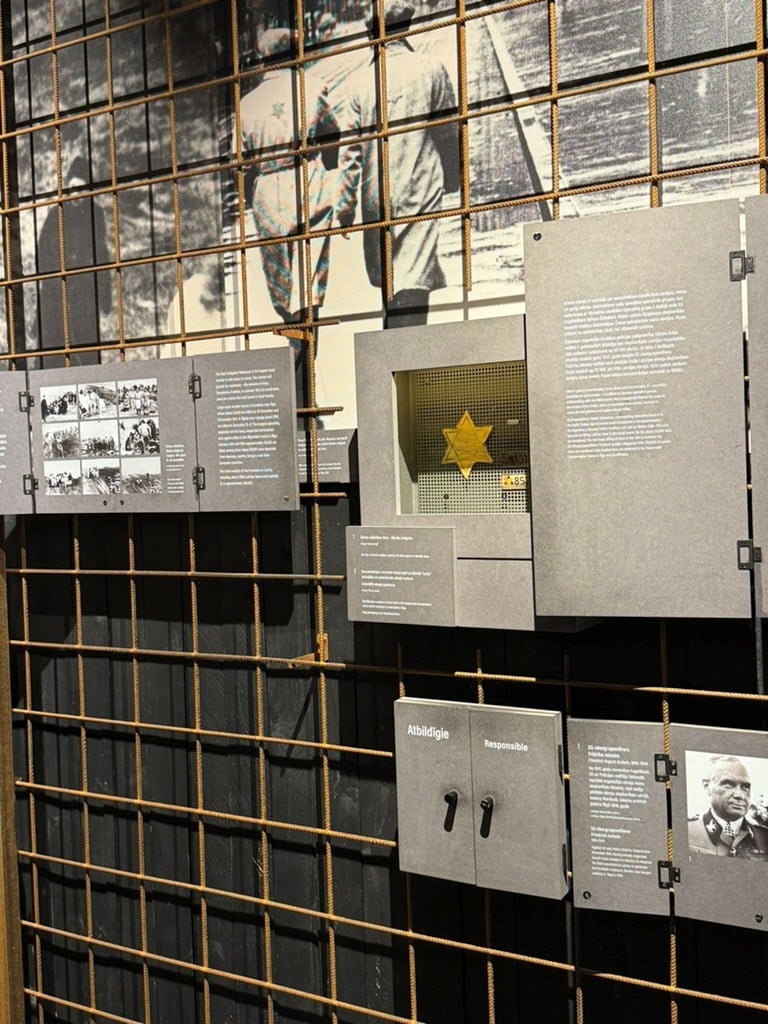
The video starts with the Soviet occupation of 1940, made possible by a treaty signed between the USSR and Nazi Germany. It takes you quickly through deportations, propaganda posters, and images of Hitler and Stalin, two totalitarian dictators that would occupy Latvia over the course of WWII. Soviet gulags and Nazi concentration camps are shown, including Holocaust prisoners and the corpse-filled ditches that were seen in Latvia.
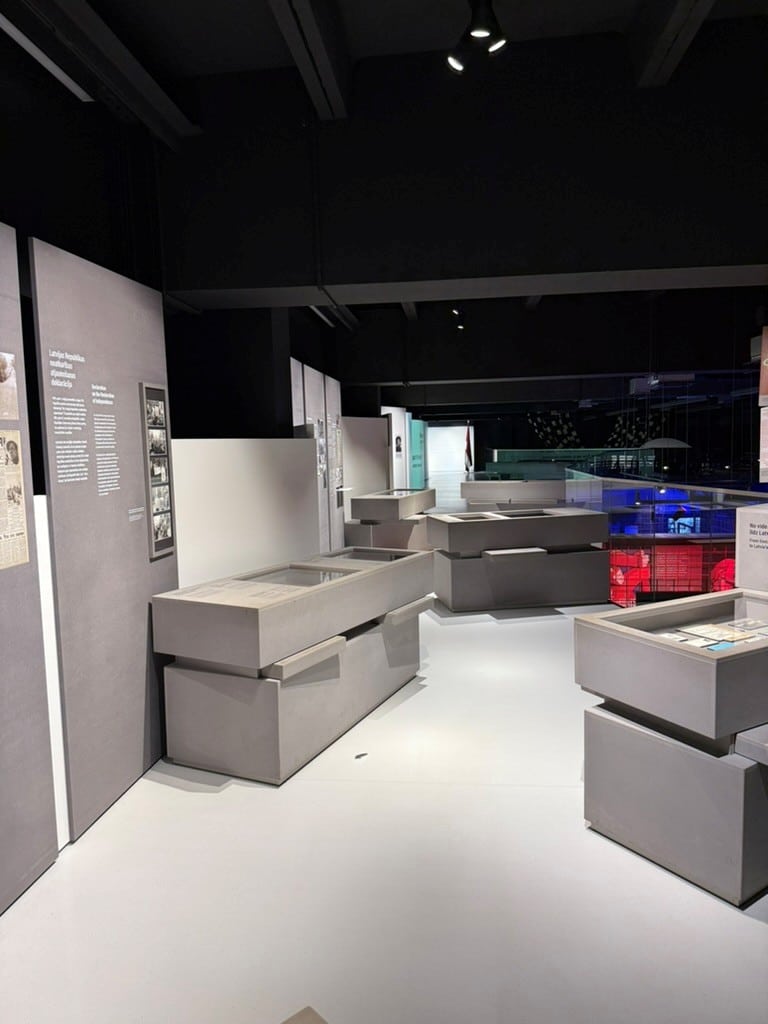
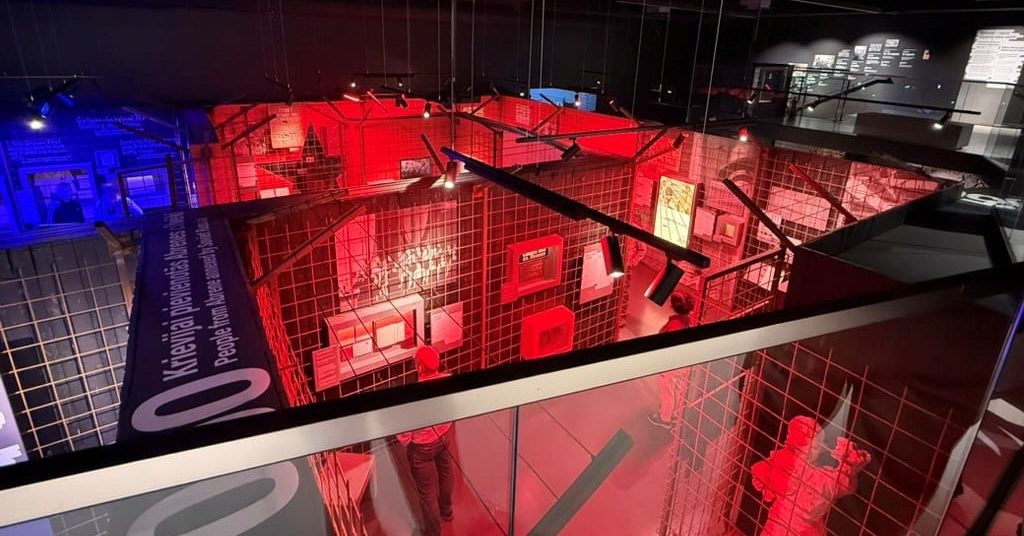
As you progress through the galleries, the exhibits remain upsetting, revealing how cruel political events transformed people’s lives beyond their control. Even the lighting changes to better convey mood. While the first room is lit in bright, white light, later displays on the Soviet Gulags are lit in dark blue to represent a cold atmosphere while displays of Soviet political leaders, symbols, and propaganda are seen under red light, creating a sense of urgency and anxiety. Throughout, many of the photographs and objects are hung up on a rusty, grid-like, rod-metal structure. I found this visual to be very effective in reinforcing the feeling of oppression and restriction to create the impression of being behind prison confinement wherever you go.
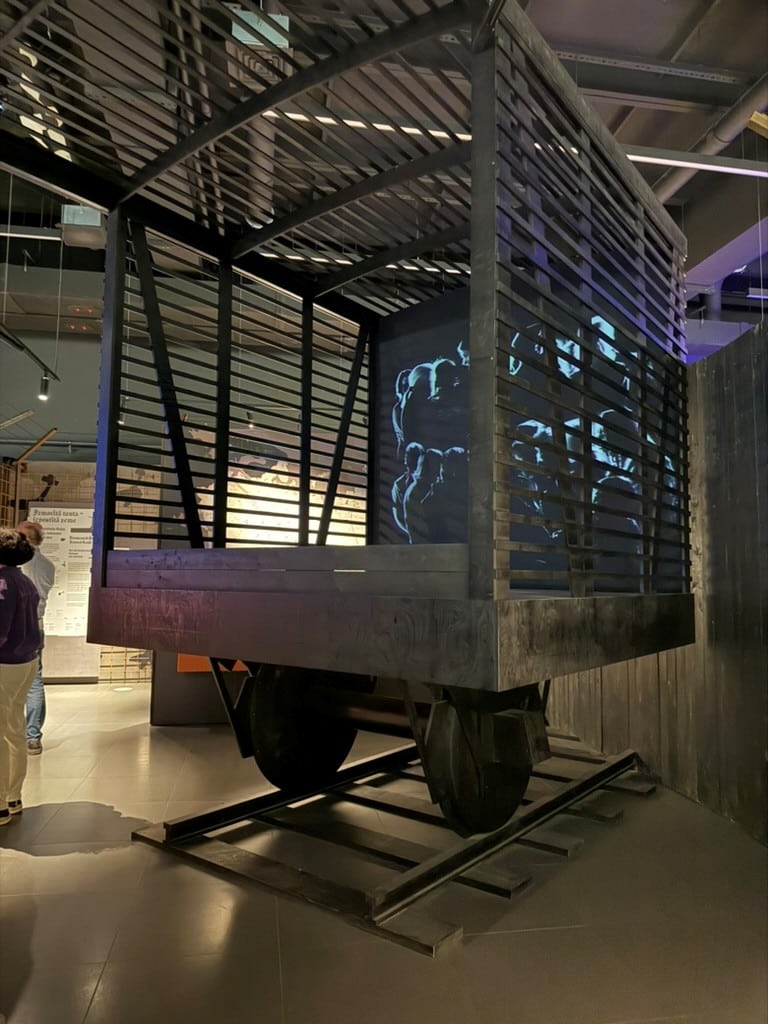
One exhibit that particularly stood out to me was the full-scale replica of a deportation railway wagon. It contained a visual element to imitate the conditions that thousands of Latvians faced when deported to remote regions. Rather than just reading a biography, visitors are able to imagine the fear and discomfort by those who endured these conditions by experiencing a physical space. Another interesting exhibit was the displays of identification documents and passports. Seeing these seemingly simple artifacts was a reminder of the personal freedom and national identity that got taken away from the Latvians as they and their independent country were forcibly incorporated into the Soviet state. Together, the museum successfully combined many diverse displays, both large and small, to create an emotional connection between those learning about the history and those who lived through it.
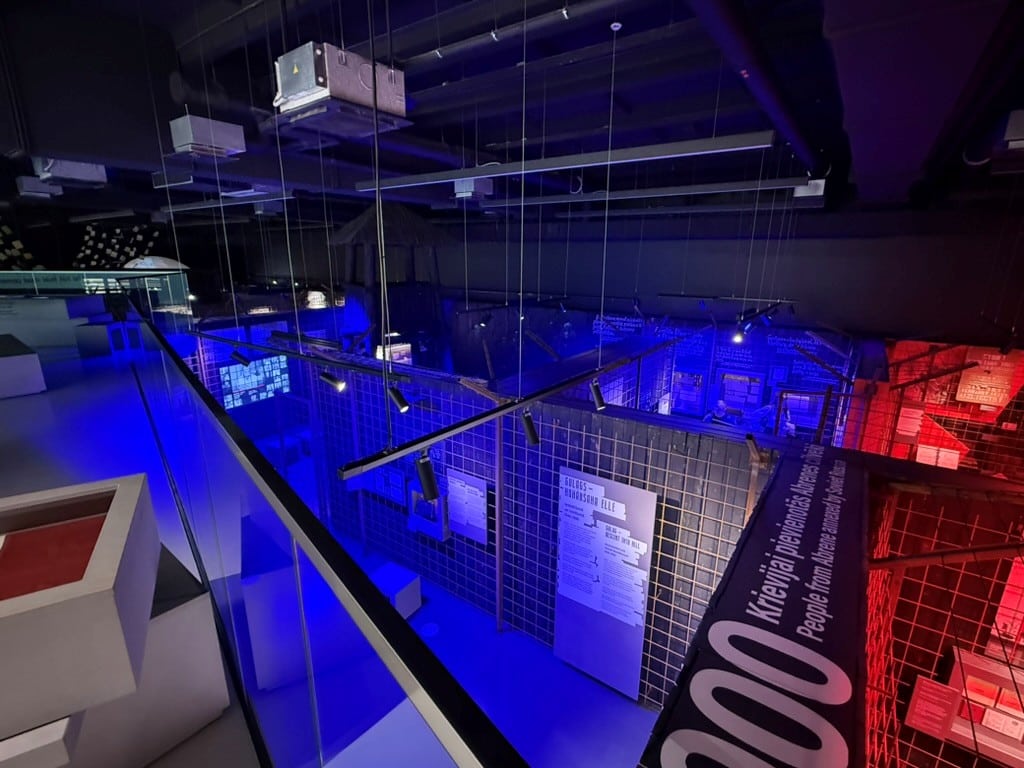
The final room takes you through Latvia’s restoration of independence and life after it. This room sits on the second floor, with clear views of the display halls below detailing the whole occupation. From this elevated perspective, the history is brought to a resolution, but with the progression of imprisonment and repression still in full view below. This reminds us that history never just disappears, but always informs the present. It is also a reminder that Latvia’s current freedom came with a cost.
Overall, the Museum of the Occupation of Latvia is far more than an exhibit of historical artifacts. Its well-planned layout takes visitors through an immersive journey highlighting the personal experiences of Latvians and consequences of both the Soviet and Nazi occupations. The museum left me with a lasting impression, as history was made to feel relevant and immediate.
Author Credits
Ely Mathews, at the time he wrote for this site, was majoring in International Affairs with minors in Economics and Russian at Texas A&M University. He participated in Riga: Russian as a Second Language, a study abroad program through SRAS, over the summer of 2026.
You’ll Also Love
The Museum of the Occupation of Latvia
The Museum of the Occupation of Latvia is a modern museum that tells the story of a past filled with loss, resilience, and survival. While the museum itself is not very big, it has been carefully designed in a chronological narrative that guides visitors through an emotional journey, with creative displays of photographs, personal belongings, […]

Bookstores and Libraries in Riga, Latvia
Bookstores and libraries can be more than places to buy or borrow books—they are windows into a city’s history, identity, and everyday life. In Riga, these spaces tell the story of Latvia’s national awakening, Soviet occupation, independence, and vibrant contemporary culture. Whether tucked away in hidden courtyards, housed in historic buildings, or rising above the […]

Museums as Self-Care
In 2018, doctors in Montreal began prescribing visits to the Montreal Museum of Fine Arts (MMFA) for patients experiencing depression, anxiety, and other health issues. This innovative approach to mental health treatment was launched under the initiative of the MMFA in collaboration with Médecins francophones du Canada (MFdC). The program allows physicians to provide patients […]

Latvian National Museum of Art
The Latvian National Museum of Art is one of Riga’s oldest and best known art museums. Its permanent collections focus specifically on Latvia’s own national artists and on telling the story of the development of art in Latvia. It also rotates temporary exhibitions that can introduce you to even more striking and more recent Latvian […]

Pauls Stradiņš Museum of the History of Medicine
The Pauls Stradiņš Museum of the History of Medicine, located in Riga, Latvia, is one of the world’s largest museums devoted to healthcare and medicine. It covers the history of medicine from ancient times to the modern, with a special focus on healthcare in Latvia. The museum showcases the historical progression of medical knowledge, instruments, […]
